REVIEW · VIENNA
Vienna: Romantic Old Town 2-Hour Discovery Tour
Book on GetYourGuide →Operated by Reisegourmet · Bookable on GetYourGuide
Two hours can change how you see Vienna. This private Old Town discovery tour strings together six storylines from past to present so the city feels logical, not random.
I love starting at the Anchor Clock in Hoher Markt and getting the kind of street-level details that are easy to miss on your own. I also like how the guide runs you through the Greek Quarter and then into the old university area, so you’re seeing Vienna’s identity in layers, not just postcard stops.
One thing to consider: the experience depends on the guide’s style. Some guides lean more on charm and small talk than strict history, so if you want heavy academic detail, you may want to ask the operator which guide is scheduled.
In This Review
- Key things I’d highlight before you go
- Anchor Clock and Hoher Markt as your 2-hour compass
- Romans, Jews, and traders: why Hoher Markt feels like the city’s control room
- Greek Quarter by the Danube: trading streets with battlefield memory
- A 2-hour tour of Vienna’s architectural mash-up
- Myths and legends you can actually spot on the street
- Jesuit university quarter: Baroque church power in a traffic-free pocket
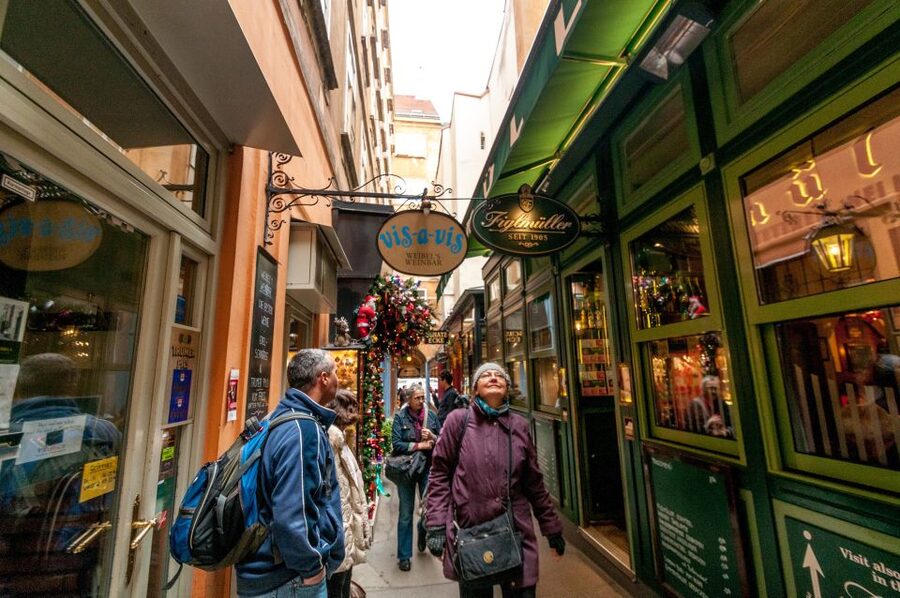
- Narrow streets and back courtyards: the medieval reality check
- Price, timing, and value for groups up to seven
- What you’ll likely get from the guide (and where a mismatch can happen)
- Who this tour suits best
- Should you book this romantic Old Town discovery tour?
- FAQ
- How long is the Vienna Romantic Old Town Discovery Tour?
- Where do I meet the guide?
- How much does the tour cost?
- Is this tour private?
- What’s included in the price?
- Are food and refreshments included?
- Which languages are available?
- Can I book the tour in a different language?
- Does the tour skip the ticket line?
- What’s the cancellation policy?
Key things I’d highlight before you go
- Anchor Clock and Hoher Markt as your launch point: you start in a square tied to power, water, and trade.
- Six themed stops in one walk: Roman and Jewish traces, trading history, myths, and the Jesuit quarter.
- Greek Quarter stories with real conflict and independence: you connect neighborhood feel to historical events.
- Vienna’s architecture shown as a timeline: Gothic, Renaissance, Baroque, Rococo, Gründerzeit, and Art Nouveau.
- Legends you can spot on facades and fountains: animals and symbolism become part of the walk.
- Old university quarter with Baroque church energy: Jesuit Church power and the art-versus-architecture rivalry angle.
Anchor Clock and Hoher Markt as your 2-hour compass
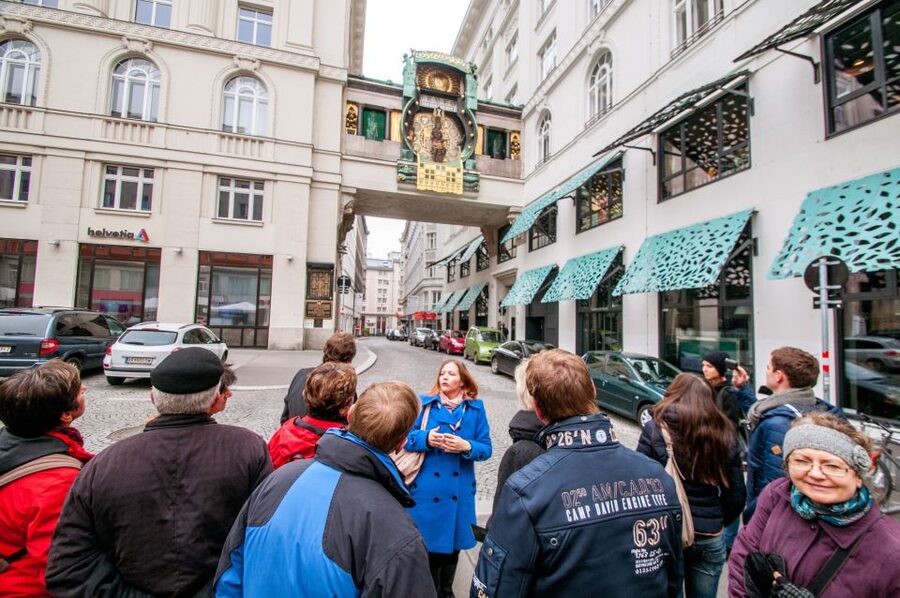
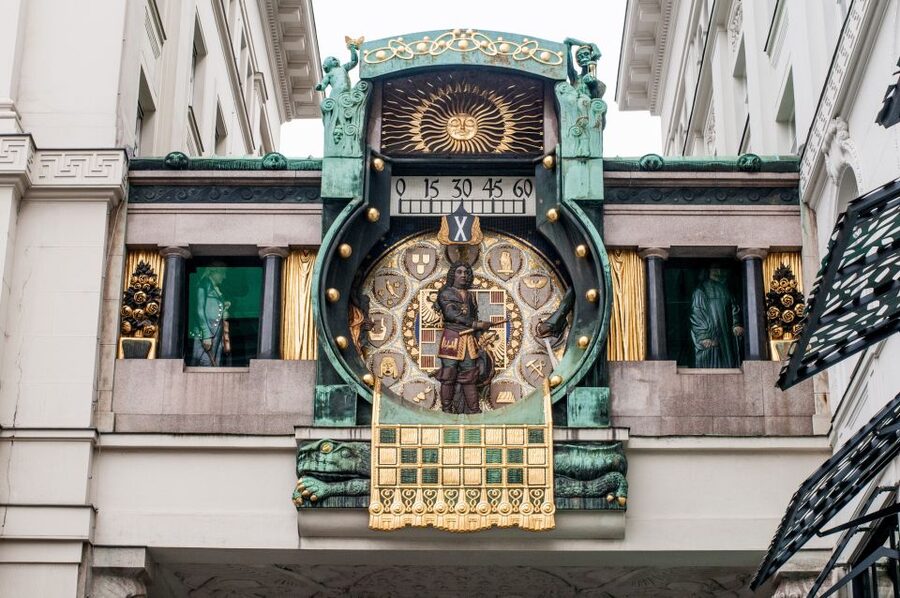
The tour begins right at the Anchor Clock in Hoher Markt, and that’s a smart choice. Instead of starting with a big-ticket landmark, you begin with a working city square and a piece of street history that sets the tone for everything after.
In this area, the guide points out sights that are easy to walk past without context. You’ll hear how the square attracted power-conscious politicians, architects, and traders for centuries, and you’ll also get pointed toward the oldest building in Vienna and the first public waterworks.
Even the Anchor Clock gets treated like more than a photo stop. You’re told to watch for a few surprises attached to it, which is exactly what you want in a short tour: meaning packed into a place you’d otherwise skim.
You can also read our reviews of more tours and experiences in Vienna.



Romans, Jews, and traders: why Hoher Markt feels like the city’s control room
Hoher Markt isn’t just a convenient starting point. It’s presented as a long-running meeting place where different groups left their fingerprints, and the guide connects those fingerprints to how Vienna grew.
Here’s what I like about this segment: it teaches you to read the city like a document. As you walk, you learn to associate buildings with the people who used them—politicians, architects, and tradesmen—so the streets start to make sense.
You also get a feel for how practical needs shaped the city. Mention of early public waterworks turns the conversation away from pure symbolism and toward real infrastructure, which makes Vienna feel lived-in rather than museum-only.
Greek Quarter by the Danube: trading streets with battlefield memory
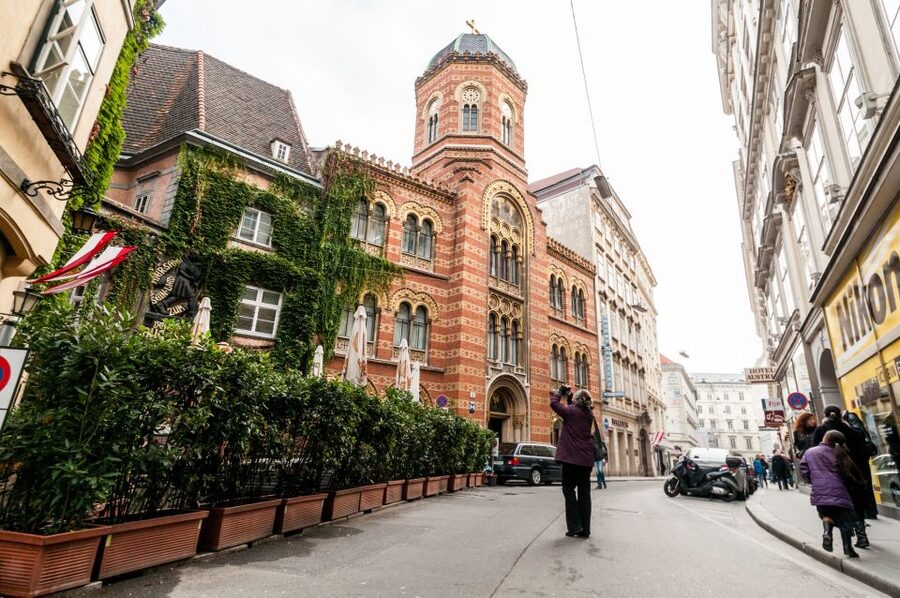
Next comes the Greek Quarter, described as hectic and shaped by trading along the Danube. That location detail matters, because the neighborhood’s feel and its history are linked: rivers brought money, people, and conflict.
The guide frames the area through the long shadow of the Ottoman Turks and the later Greek fight for independence. Whether you know the details already or not, the tour helps you understand why a trading quarter could become a stage for warfare and political change.
I like that this stop pushes you to look beyond today’s street activity. You’re encouraged to think about how centuries of commerce created layers, and how those layers still show up in corners and street character.
A 2-hour tour of Vienna’s architectural mash-up
Vienna’s Old Town can feel like one long parade of beauty. This tour helps you sort it out by walking through architecture as if it were a timeline.
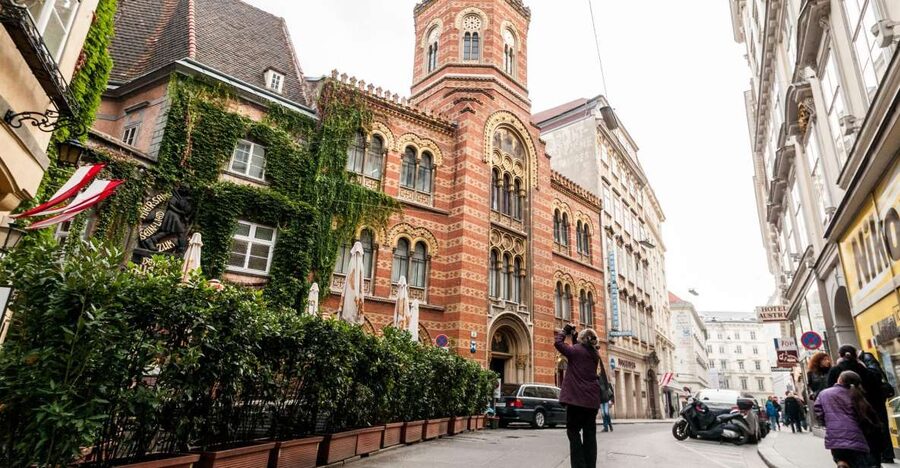
You’re shown how many styles coexist in one compact area—Gothic residential towers, medieval paving, Renaissance back courtyards, Baroque palaces, rows of Rococo houses, Gründerzeit buildings, and Art Nouveau elegance. The guide doesn’t treat these styles like trivia; it connects them to what each era was trying to express.
Practical takeaway for you: when you spot a facade, you’ll start thinking, What period is this, and what kind of city life did it serve? That one shift can make the rest of your Vienna days more satisfying, because you’re not just seeing buildings—you’re decoding them.
Myths and legends you can actually spot on the street
Most tours talk legends. This one tries to make them visible by tying stories to ornaments and symbols you can see.
Animals play an important role in the mythology here, and the guide points you toward how they appear as decorations on facades and fountains. That turns legend-telling into a kind of street scavenger hunt, which is perfect for a 2-hour timeframe.
If you like walking tours where you’re actively observing, this section delivers. You’ll come away knowing what to look for next time you’re in Vienna, instead of forgetting the story the moment you round the next corner.

Jesuit university quarter: Baroque church power in a traffic-free pocket
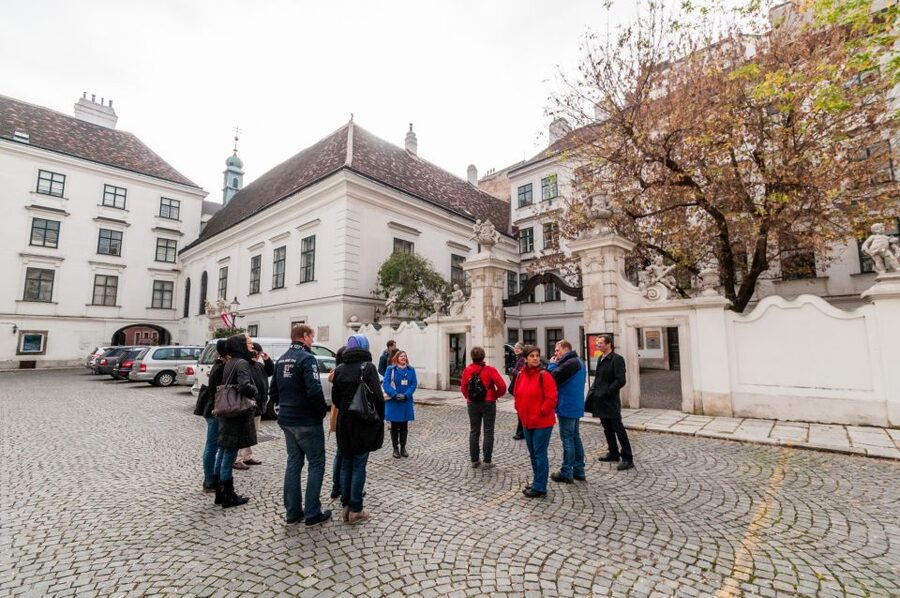
The old university segment focuses on the Jesuit quarter, which the tour describes as sealed off from traffic. That detail matters because it creates the right mood: quieter lanes, tighter streets, and a more interior feel.
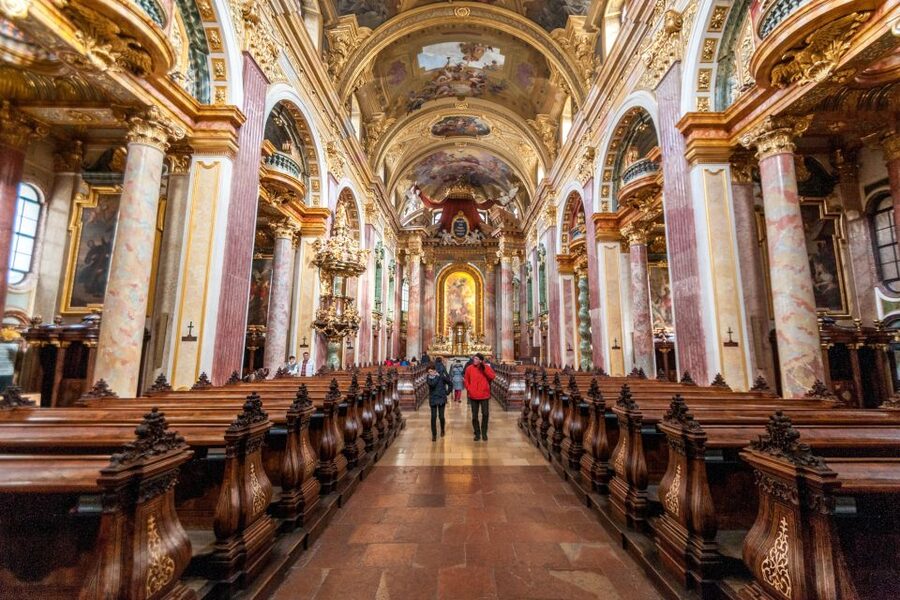
You’ll stop at a square with a fountain where you can look into the interior of the Jesuit Church. The emphasis is on Baroque exuberance and church power, plus an interesting angle on rivalry between painters and architects within Vienna.
This is the part where the tour feels especially useful if you’re trying to understand Vienna as an arts city. You’re not only seeing style—you’re hearing how art, design, and religious influence competed and cooperated over time.
There’s also a practical advantage. Since the tour includes skipping the ticket line, you’re less likely to lose minutes when you arrive and want to get the most from your limited 2 hours.
Narrow streets and back courtyards: the medieval reality check
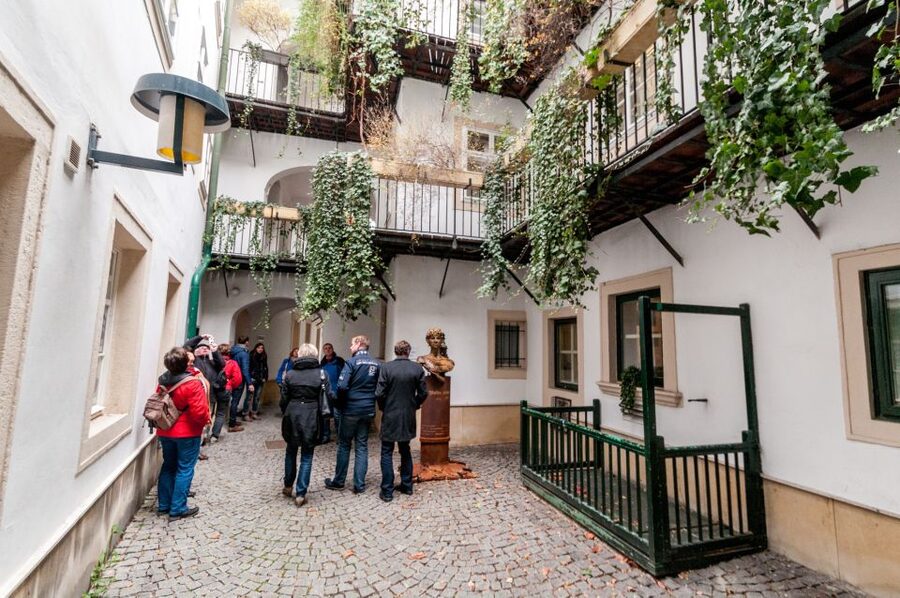
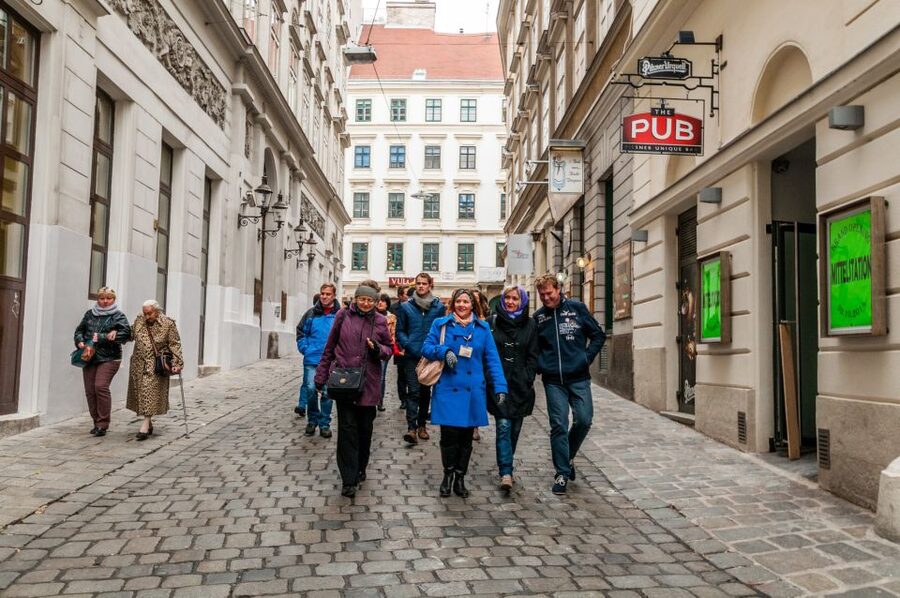
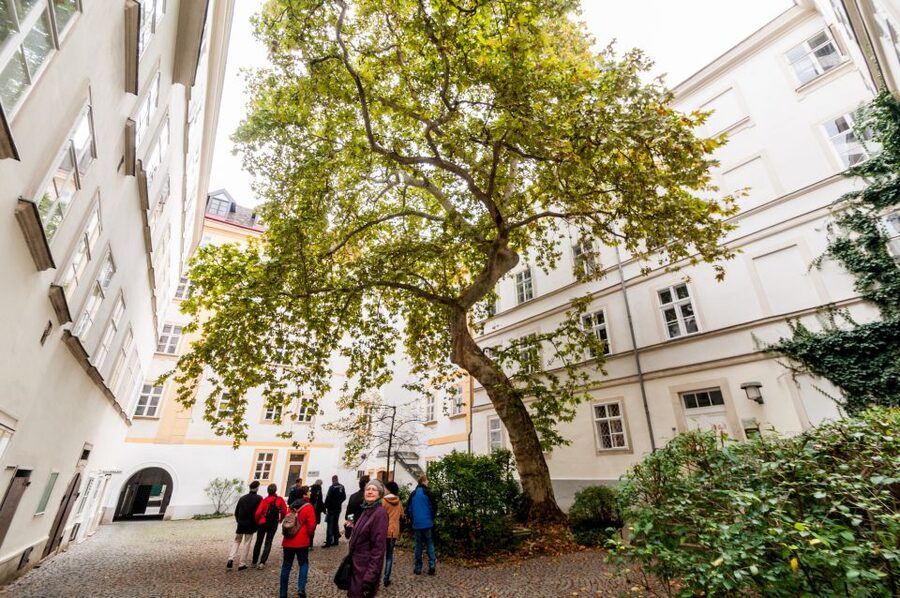
The tour closes in the kind of places that make Vienna feel intimate: narrow streets, winding lanes, and back courtyards. The guide uses the geometry of the streets—curves, tight passages, hidden entrances—to make everyday life from the Middle Ages feel imaginable.
Instead of only aesthetic talk, you get a blunt reminder about hygiene and daily conditions. The tour asks you to picture what opening a window might have meant in those days, which gives the city’s charm a slightly darker, more human edge.
For you, the takeaway is simple: wear comfortable shoes. These lanes are where you slow down without realizing it, and a short tour becomes much longer in the best way because you’re noticing details, not just covering ground.
Price, timing, and value for groups up to seven
The price is $352 per group, up to 7 people, for a duration of 2 hours. That means the value depends on your group size: if you’re traveling as a couple or small group, the per-person cost can feel reasonable for a private guide. If you’re a larger group that can hit the full seven-person limit, it can also turn into a cost-effective way to get a guided “Old Town” orientation.
You should know what’s included and what isn’t. It’s a private guide, but food and refreshments aren’t included, so plan to eat before or after. The tour also notes you can skip the ticket line, which can help you protect your time inside any attractions the route touches.
As for logistics, you meet at the Anchor Clock in Hoher Markt (1010 Vienna). Arrive about 10 minutes early so you don’t start stressed and so you can get oriented for the walk.
What you’ll likely get from the guide (and where a mismatch can happen)
The strongest praise in the guide feedback centers on detail, charm, and the ability to move you through the city efficiently. Names that came up include Wolfgang Auinger and Max, both described as motivating and able to make the walk feel lively while still informative.
I’d also pay attention to how you like history presented. One feedback described Wolfgang Auinger as highly recommended and charmed, with a focus on making Vienna interesting. Another mentioned Max as competent and very good at delivery, with plenty of detail even when the walk focused in areas like the northeast and behind the cathedral.
On the other hand, one note flagged that a guide can be a bit too talkative and lean toward Viennese humor rather than strictly historical depth. If that would annoy you, you’ll be happier if you ask the operator for a guide known for history-heavy commentary.
Who this tour suits best
This is a great match if you want a high-impact orientation in a short amount of time. You’ll love it if you enjoy architecture, symbolism, and the idea that Vienna is built from many eras speaking to each other.
It’s also a solid choice for couples or friends who want a private feel without a long day. The six-topic structure helps you feel like you’ve learned something real rather than collected a stack of photos.
If you hate walking or want lots of free time, you might find the pacing too structured. And if you’re very picky about academic precision, you should be ready to choose your guide carefully.
Should you book this romantic Old Town discovery tour?
I think you should book it if you want Vienna’s Old Town explained through stories you can see—Hoher Markt, the Greek Quarter, architectural styles, legends with animal symbols, and the Jesuit university lanes. The private guide format is especially valuable because you can ask quick questions when something catches your eye.
I’d skip or reconsider if you mainly want “must-see monuments” and lots of unscheduled time. This tour is designed for meaning per minute, not for hanging out in one place for an hour.
If you’re the type who likes to understand what you’re looking at while you walk, this 2-hour Anchor Clock to Jesuit quarter route is a very solid use of your time.
FAQ
How long is the Vienna Romantic Old Town Discovery Tour?
The tour lasts 2 hours.
Where do I meet the guide?
You meet at the Anchor Clock, Hoher Markt, 1010 Vienna. Arrive 10 minutes early.
How much does the tour cost?
The price is $352 per group, up to 7 people.
Is this tour private?
A private group is available, and a private guide is included.
What’s included in the price?
A private guide is included.
Are food and refreshments included?
No. Food and refreshments are not included.
Which languages are available?
Live tour guidance is offered in German, Spanish, Chinese, Dutch, English, French, Italian, Japanese, Portuguese, and Russian.
Can I book the tour in a different language?
The information says you should contact the tour operator if you want to book in another language.
Does the tour skip the ticket line?
Yes, it includes skipping the ticket line.
What’s the cancellation policy?
Free cancellation is listed up to 24 hours in advance for a full refund.