REVIEW · LISBON
Lisbon Trendy Downtown – From Romantic Chic to Postmodern Glamour
Book on Viator →Operated by Lisbon Art & Soul · Bookable on Viator
Lisbon’s downtown reads like a living history book. This 3 to 4 hour walking tour takes you through Chiado and Baixa with a guide and a professional photographer, focused on the stories behind the architecture and the small details you’d normally miss on your own. I especially love the way Luis, your guide, points out building clues and tile details, including decorative evidence of what shops used to be. And I really like that you’re thinking about photos the whole time, not just the big monuments.
One thing to consider: it’s a real walking route across central Lisbon. If you dislike cobblestones or you’re low on energy for a few hours, plan on wearing supportive shoes and keeping water handy.
In This Review
- Key highlights for Lisbon Trendy Downtown
- Lisbon’s Chiado and Baixa in One Walk
- Meeting at Estação Ferroviária do Sul e Sueste, Ending at Praça Luís de Camões
- Stop 1: Praca do Comercio and the Royal Square After 1755
- Stop 2: Elevador de Santa Justa Area, Pastelaria Stops, and Downtown Rebirth
- Stop 3: Praça Dom Pedro IV and the 18th-Century Frame
- Stop 4: Praca da Figueira and the Hospital for Dolls
- Stop 5: Igreja de São Domingos, Ruins Inside, and a Cherry Liqueur Nearby
- Stop 6: Luvaria Ulisses in the Carmo Wall and Grand Armazéns After a Fire
- Stop 7: Armazens do Chiado and the Memory of Department Stores
- Stop 8: Bertrand Bookstore Culture and Fernando Pessoa’s World
- Stop 9: Praca Luis de Camoes, Romantic Lisbon Finale
- How the Photographer and Luis’s Detail-Reading Work Together
- Price and Value: What $29.64 Buys in Central Lisbon
- Who Should Book Lisbon Trendy Downtown
- Should You Book This Walking Tour?
- FAQ
- How long is the Lisbon Trendy Downtown walking tour?
- Where does the tour start and end?
- Is the Santa Justa Elevator stop included?
- What’s included in the price?
- Is this tour suitable for families or kids?
- Is it private or shared with other groups?
Key highlights for Lisbon Trendy Downtown
- Luis makes architecture readable, calling out tiles, storefront details, and visual hints that tell Lisbon’s past
- Photo support while you walk, with a professional photographer moving with the group so you can get vacation shots without awkward guesswork
- 1755 rebuilding stories are threaded everywhere, from the Royal Square to the downtown areas shaped by the earthquake and tsunami
- Major squares without ticket hassle, since the listed stops are treated as admission-ticket free in the route
- Shopping streets with real character, including Luvaria Ulisses and the Carmo Wall area
- Writer-and-cafe Lisbon, with Fernando Pessoa’s sculpture and classic bookstore culture along the route
Lisbon’s Chiado and Baixa in One Walk
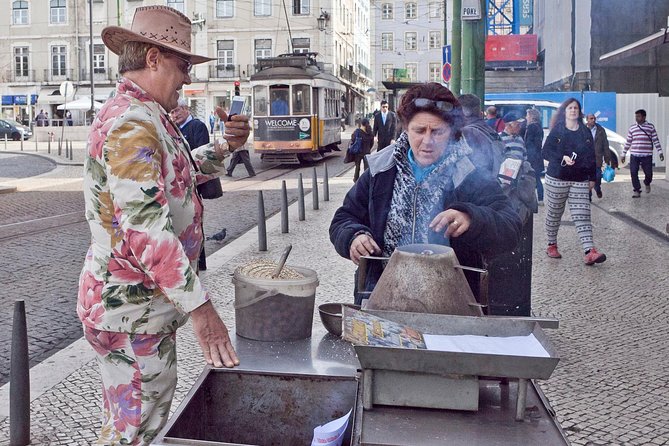
Chiado and Baixa are the two sides of Lisbon most people want to see, but they can feel different street to street. Baixa is structured and practical: squares, wide approaches, and streets planned to help a city function again. Chiado carries a more stylish mood, with department-store history, bookish corners, and a romance vibe that’s easy to feel even if you don’t know every name on the building fronts.
What makes this tour worth your time is how it connects the city’s look to what happened in 1755. You don’t just pass monuments. You get a guided explanation of how the earthquake and tsunami era shaped the rebuilt downtown and why certain places look the way they do now. You’ll also notice that the route keeps moving between older and newer Lisbon signals: post-1755 order, but also later layers like fires and rebuilding that left their own marks.
The tour’s title hints at the vibe—romantic chic plus postmodern glam—yet the foundation is very grounded. You’re walking the “trend” areas, but with a sharp focus on why they exist and what their walls are trying to tell you.
You can also read our reviews of more tours and experiences in Lisbon.


Meeting at Estação Ferroviária do Sul e Sueste, Ending at Praça Luís de Camões

You start at Estação Ferroviária do Sul e Sueste, at Av. Infante Dom Henrique 1B (1100-016 Lisboa). The endpoint is Praça Luís de Camões. The walking route stays in central Lisbon, and the meeting area is near public transportation, which is a relief if you’re juggling tram or metro connections before a tour.
The time window is about 3 to 4 hours, so you should treat it like a planned walking block, not a relaxed stroll that you can casually pause for long breaks. Since the stops are mostly 15 to 20 minutes, you get a steady flow of information without it turning into a lecture marathon.
Also, this is designed as a private tour for your group. That matters because you’re not squeezed into a big crowd where it’s hard to hear, and you’re more likely to get practical help with photos as you move.
Stop 1: Praca do Comercio and the Royal Square After 1755
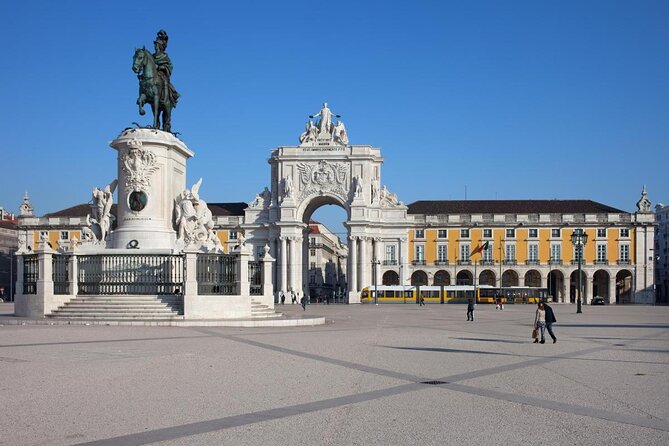
Your first stop is Praca do Comercio, also called Terreiro do Paco. This is Lisbon’s grand, welcoming waterfront square—the one that feels made for dramatic photos. The core story here is the rebuilding after the 1755 tsunami. The Royal Square’s majestic buildings and fine sculptural work aren’t just decoration; they represent a city trying to reassert itself after catastrophe.
You’ll also notice the pier setting. That small detail helps the square make sense: it’s not an isolated plaza. It’s part of a working, historical waterfront. If you’re the kind of person who likes to understand why a place feels the way it does, this opening stop sets the tone.
What to watch for: look at the building facades as a whole rather than scanning one corner. The square’s power comes from how the elements line up in your view.
Stop 2: Elevador de Santa Justa Area, Pastelaria Stops, and Downtown Rebirth
Next up is Elevador de Santa Justa. Even if you don’t focus on riding it, the lift is a signpost for Lisbon’s 19th-century downtown mood. In this route, the elevator area is tied back to what came after 1755 and the later versions of Lisbon’s identity—industrial ambition mixed with city-life charm.
Around this stop you’ll pass Pastelaria A Camponesa and Animatógrafo. That’s important for one simple reason: downtown Lisbon isn’t frozen in time. It keeps changing, and those businesses help you “read” the street as lived-in, not staged.
Small practical note: the stop is short, so if you want to eat a pastel after, keep your timing realistic. This is a walking tour, so you’ll likely be saving tastings for later unless your schedule lines up.
Stop 3: Praça Dom Pedro IV and the 18th-Century Frame

Praca Dom Pedro IV is one of the city’s most recognizable squares, and the route gives you the key reasons why. You’ll get a view of its frame of 18th-century buildings, plus major landmarks like the National Theater.
The walking tour also calls out pavement texture—there’s wave pattern pavement that you can actually spot when you slow down for a moment. It’s the kind of detail most people miss because they’re rushing to the closest postcard angle.
This stop also works as a breather. You’re still in motion, but the square gives you open space to reset your eyes before the route turns more “street-and-shop” again.





Stop 4: Praca da Figueira and the Hospital for Dolls

Then you slide into Praca da Figueira, described as having some of the most original shops in town. A highlight here is the Hospital for Dolls—exactly the kind of quirky store that makes Lisbon feel human and strange in a good way.
This is a great stop if you like browsing, not just ticking boxes. Even if you don’t buy anything, you’ll get the sense of how Lisbon’s shopping culture can be playful and themed without trying too hard.
What to consider: this area is more shop-forward than monument-forward. If you want lots of big-photo viewpoints, you may find yourself leaning into details, signage, and window scenes more than skyline shots.
Stop 5: Igreja de São Domingos, Ruins Inside, and a Cherry Liqueur Nearby
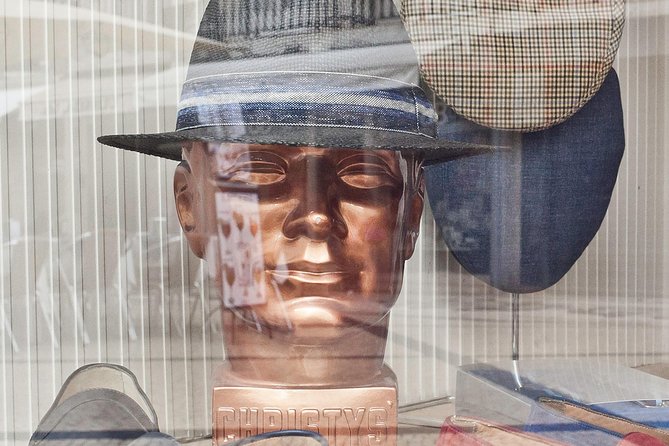
At Igreja de S Domingos, you’ll see a majestic facade from the outside, then the story shifts when you look at what’s inside: overwhelming ruins. The tour also notes a masonic churchyard, which adds another layer beyond the typical “church as a building” viewpoint.
One of the more fun practical notes is the mention of the best cherry liqueur just around the corner. Even better: you’ll know it’s there, so after the tour you can choose whether to make a stop. Just remember the tour doesn’t include drinks, so treat it as a future payoff rather than an included tasting.
If you’re trying to plan your day, this is a good time to think about where you’ll grab something to eat later, because the rest of the walk keeps moving through lively downtown streets.
Stop 6: Luvaria Ulisses in the Carmo Wall and Grand Armazéns After a Fire
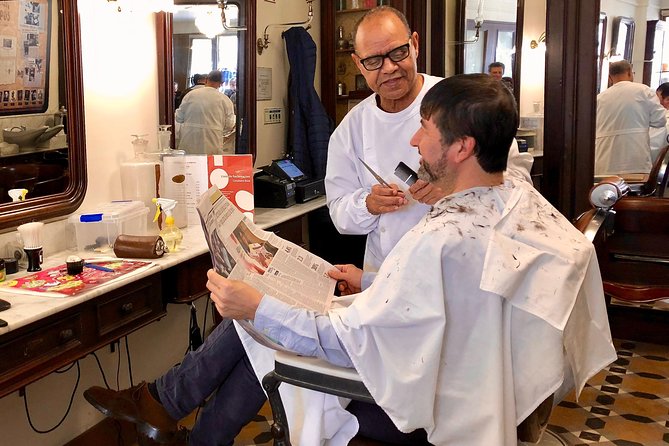
This stop is one of the most visually memorable on the route: Luvaria Ulisses. The tour describes an incredible setup—shops directly dug in the massive Carmo Wall. That detail alone is worth slowing down for, because it’s easy to walk past a wall without realizing it holds storefront life.
You’ll also pass something more modern in meaning: Grandes Armazéns, described as being rebuilt after a ravaging fire in 1988. That’s where the tour’s “past meets later” theme becomes real. Lisbon doesn’t only preserve. It rebuilds with different eras making their mark.
If you love “how did they build this” questions, this stop will feel satisfying. You’ll get the sense that the city’s walls are records, not just background scenery.
Stop 7: Armazens do Chiado and the Memory of Department Stores
Next comes Armazens do Chiado, tied to the memories of the Department Store area. The tour name-drops key places connected to that legacy, like Antigos Armazéns Grandella, Chiado, Paris em Lisboa, and Ramiro Leão.
This is a subtle but clever part of the walk. Instead of treating downtown Lisbon as only monuments, the route shows you that Lisbon’s identity also lived in shopping and commerce. Department stores were once the social hubs for people showing up, browsing, and meeting the city’s culture in a very daily way.
If you’re someone who loves street-level atmosphere, you’ll appreciate this. The details here help you understand why Chiado feels stylish even when you’re not looking at a museum.
Stop 8: Bertrand Bookstore Culture and Fernando Pessoa’s World
The tour then flows to the street culture around Bertrand, described as the oldest bookstore in the world. You also get Brasileira, noted as a muster point for artists and writers for the last hundred years.
This isn’t just romantic talk. It helps explain why Lisbon keeps showing up in creative writing and intellectual circles. When you walk these streets with that context, it feels less like sightseeing and more like following a thread.
After Bertrand and Brasileira, you’ll reach the Escultura de Fernando Pessoa, a clear reminder that Lisbon’s identity is also made of ideas. Even if you’re not a Pessoa scholar, it helps to see how a city can honor writers in public space.
Pair this with a photo mindset. These are the spots where street scenes feel like a story, and the photographer help makes it easier to capture that mood instead of getting only generic shots.
Stop 9: Praca Luis de Camoes, Romantic Lisbon Finale
Your walk ends at Praça Luís de Camões, described as epitomizing romantic Lisbon and also one of the most lively places in town. This makes sense as a finale: after all those squares, walls, ruins, and bookish corners, you’re finishing in a place that feels made for lingering.
It’s a good endpoint because it’s not out of the way. You can step off the tour and keep going on your own—grab a drink, find dinner nearby, or connect back to transport without a major relocation.
Also, since the tour ends here, you get a natural stopping point for your day. No need to invent your own “end-of-walk” plan.
How the Photographer and Luis’s Detail-Reading Work Together
This tour includes multiple roles: a local guide, a professional guide, and a professional photographer guide. In practice, that means you don’t have to choose between learning and capturing photos.
What I liked about Luis’s approach is that he treats Lisbon like a visual puzzle. He explains nuances about buildings, architecture, tiles on the ground, and tiles on buildings and storefronts. He also points out which stores used to be something else and shows the decorative evidence. That turns your attention from just monuments to the everyday surfaces that Lisbon residents pass every day.
For your own photos, the big win is timing. Instead of sprinting for the perfect angle, the group keeps moving through the most photogenic spots, and the photographer helps you get ready and framed. If you’ve ever wandered a city after a tour and thought, I saw that but my photos look flat, this format usually fixes that feeling.
Practical tip: wear something comfortable but not too dark if the light is harsh. Lisbon light can be bright, and it helps when you don’t look like you’re bracing for a weather test.
Price and Value: What $29.64 Buys in Central Lisbon
At $29.64 per person, this tour is priced like a smart budget add-on rather than an expensive day-long production. The value comes from three things you actually feel during the walk:
First, the guide-led context. You don’t just move from square to square—you get the meaning of what you’re seeing, especially around the 1755 rebuilding timeline.
Second, the photographer. That’s a big deal at this price point. It turns your downtown time into something you can revisit later with better results, without paying for separate photo sessions.
Third, the itinerary is structured around major stops marked as admission ticket free. That means you spend time walking and learning instead of standing in lines or budgeting for multiple entries.
One caution on value: this tour is for people who enjoy detail. If you only want to see a single icon from one angle and then move on, you might feel the pace is information-heavy. If you like architecture cues, shopfront stories, and “why does it look like this,” it’s a good fit.
Who Should Book Lisbon Trendy Downtown
You’ll likely enjoy this most if you:
- Are a first-time Lisbon visitor who wants a downtown orientation through Chiado and Baixa
- Like walking tours where the guide explains how small details add up
- Care about photos but don’t want to spend the whole day playing camera director
- Want the 1755 post-disaster rebuilding thread connected across multiple places
You might skip it if you:
- Want a mostly seated tour or museum-style pacing
- Have limited ability to walk for about 3 to 4 hours on cobblestones and uneven surfaces
Should You Book This Walking Tour?
I think you should book it if you want Lisbon to feel like a place with layers, not just a list of sights. The combination of Luis’s building-and-tile storytelling plus the professional photographer is the standout pairing. You end up with clearer memories and better photos, without turning the day into a long slog.
If you’re on the fence, look at your own travel style. If you enjoy noticing storefront details, pavement patterns, and the way squares frame buildings, this tour will feel like money well spent. If you’re more about quick icon shots and fast exits, you may prefer a shorter stop-and-go option.
FAQ
How long is the Lisbon Trendy Downtown walking tour?
It lasts about 3 to 4 hours.
Where does the tour start and end?
The tour starts at Estação Ferroviária do Sul e Sueste (Av. Infante Dom Henrique 1B, Lisboa) and ends at Praça Luís de Camões.
Is the Santa Justa Elevator stop included?
The itinerary includes a stop at Elevador de Santa Justa, and the listed admission for the stops is marked as free in the route.
What’s included in the price?
You get a local guide, a professional guide, and a professional photographer guide. There are group discounts and mobile ticket use.
Is this tour suitable for families or kids?
Children must be accompanied by an adult, and the child rate applies only when sharing with 2 paying adults.
Is it private or shared with other groups?
This is a private tour or activity, so only your group participates.