REVIEW · CRETE
True Love in Chania: Self-Guided Romantic Puzzle Walk
Book on Viator →Operated by Questo · Bookable on Viator
Chania romance, solved one clue at a time. True Love in Chania: Self-Guided Romantic Puzzle Walk turns a stroll through the Old Town into a self-guided puzzle format that links major waterfront sights with quieter streets. I also like how the route threads together churches, mosques, and Venetian harbor landmarks in one continuous loop, so you see more than just the famous views. One catch: the game lives on your phone, so a fully charged device (and ideally a power bank) matters more than usual.
For the price of $7.24 per person and about 1.5 to 2 hours, this is a smart way to get value without locking yourself into a fixed tour tempo. It’s a private activity, your mobile ticket is delivered digitally, and every listed stop is ticket-free—so you’re mostly paying for the experience and the story-guided route, not admissions.
In This Review
- Key things to know before you start
- Chania’s love-story puzzle walk: what it feels like on the ground
- Price and time: where the $7.24 value really comes from
- Using the Questo app (and avoiding the common phone problems)
- Stop 1: Saint Nicholas Church in Splantzia—warm-up for the story
- Stop 2: The Lighthouse of Chania—harbor views without a long detour
- Stop 3: Akti Enoseos 9 and the Neoria shipyards—Venetian work made visible
- Stop 4: Akti Tompazi and the Yali Mosque—Ottoman Chania in one stop
- Stop 5: Kondilaki and the Chania synagogue—what 15th-century influence looks like
- Stop 6: Theotokopoulou street—where the story meets the streets
- Stop 7: Πλατεία Τάλω and the Hand Monument (To Heri)—a modern reset
- Stop 8: Firka Venetian Fortress—defense architecture at the harbor
- Stop 9: Kanevarou and Sintrivani Square—Venetian and Ottoman buildings together
- Stop 10: Chalidon Cathedral—Venetian-era roots and later changes
- How to pace the walk in busy months (so it stays fun)
- Who should book this romantic puzzle walk
- Should you book True Love in Chania?
- FAQ
- How long is the True Love in Chania self-guided puzzle walk?
- What does it cost per person?
- What language is the experience offered in?
- Is this a guided tour with a person or self-guided?
- Where do I start and where does it end?
- Do I need to buy tickets for the stops?
- What are the opening hours for the experience?
- What do I need on my phone before I begin?
- Can I get a full refund if I cancel?
- Is it near public transportation and are service animals allowed?
Key things to know before you start
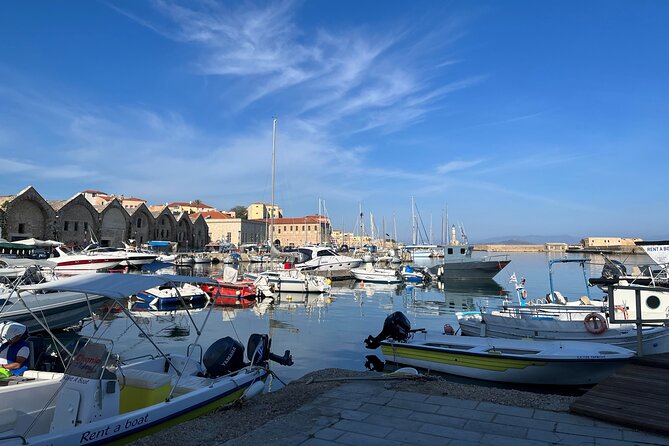
- Self-guided route with story + clues: follow instructions in the Questo app at your own pace.
- Old Town, but not just the main drag: you’ll move through harbor entrances, fortifications, and side streets.
- Stop-by-stop freedom: each location shows a suggested time, but you can linger before moving on.
- Phone power is part of the deal: battery drain can be real, so plan ahead.
- Private by design: only your group participates, which helps you avoid stop-and-go crowds.
Chania’s love-story puzzle walk: what it feels like on the ground
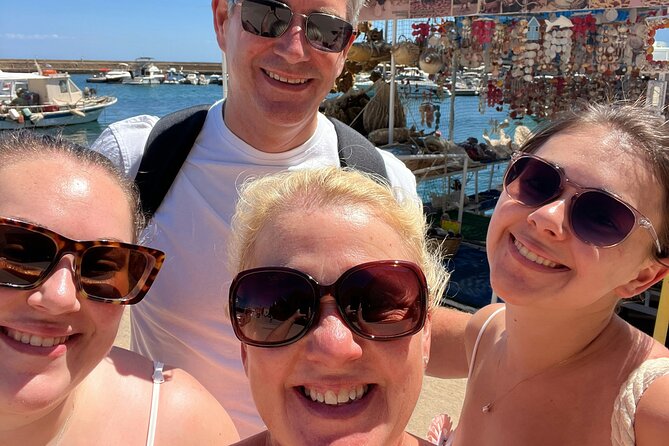
This isn’t a “walk, listen, take photos” tour. It’s more like a roaming scavenger game that happens to take you past real Chania landmarks. Your phone guides you from spot to spot, and the story pushes you along the route so you don’t just wander randomly.
That mix is the charm. In Old Town, it’s easy to see the obvious waterfront views and then miss what’s between them. This route gives you a reason to turn down the smaller streets and to look at buildings from angles you’d probably skip on your own.
The vibe also helps if you’re traveling as a couple or with a partner who doesn’t always want a full-on “guided” experience. You get shared moments, a little humor, and a clear path through Chania’s layers.
You can also read our reviews of more tours and experiences in Crete.


Price and time: where the $7.24 value really comes from
At $7.24 per person, you’re not paying for guides, entrances, or a long itinerary. You’re paying for a structured route plus the phone-based puzzle/story experience.
The duration—about 1 hour 30 minutes to 2 hours—fits well into a day in Chania. It’s long enough to feel like you did something special, but short enough that you can still add a café break afterward or pair it with a beach stroll later.
Most importantly, the stops are all listed as admission ticket free. That means your “cost” stays focused on the activity itself, not on added entry fees as you go.
Using the Questo app (and avoiding the common phone problems)
You’ll need a charged phone and the Questo app. You must download the app and create an account first, using the same email you used to buy the activity. Once you start, follow the on-screen instructions to move between stops.
This is where you can make or break the experience. The puzzle needs power, and one practical issue is that the game can drain your battery faster than you’d expect. If your phone is already on low power when you begin, you’ll feel the pressure to rush.
Also, don’t get tempted to switch devices mid-route. If you try to log into your account on another device, the game may reset and send you back to the start. The easiest solution is boring but effective: start with a full charge, keep the phone in good condition, and if you can, use a portable battery pack.
Stop 1: Saint Nicholas Church in Splantzia—warm-up for the story
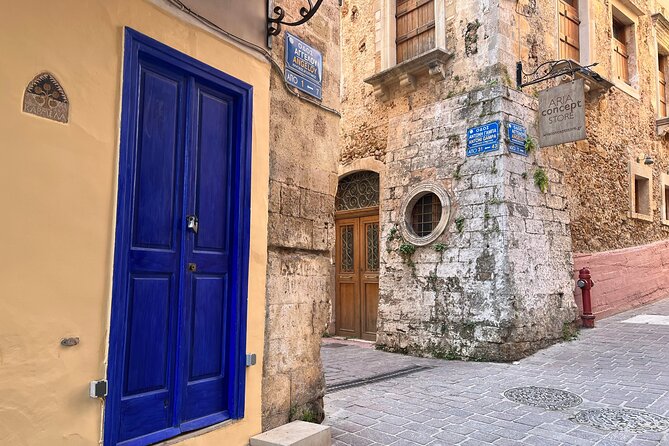
Your walk begins in Splantzia at Saint Nicholas Church (Agios Nikolaos in Splantzia). This is a historic religious landmark, and it’s a strong first clue because it immediately puts you in “Old Town Chania” mode.
The plan suggests about 10 minutes, but you can spend as much time as you want before you move to the next directions. That flexibility is useful: if the story needs a moment to land, this stop gives you breathing room.
Practical tip: use this first leg to get your phone set up—brightness, volume, and any power-saving settings. If you’re going to run into trouble, it’s best to find it right away.
Stop 2: The Lighthouse of Chania—harbor views without a long detour
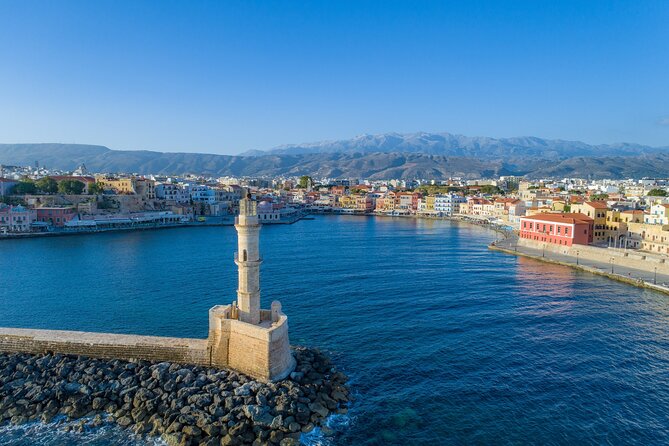
Next you’ll reach the Lighthouse of Chania, the classic white tower with a red lantern. It isn’t tall, but it’s extremely easy to spot near the harbor entrance, so it works well as a visual waypoint.
This stop is ticket-free and usually a quick one—about 10 minutes—because you’re meant to enjoy the view and then get back to solving. If you’re there during good light, the lighthouse area is a great place for a “quick but memorable” photo.
Keep your timing in mind here. Chania’s waterfront can get busy, and the puzzle adds momentum. If you want calmer streets, plan your start early in the day.

Stop 3: Akti Enoseos 9 and the Neoria shipyards—Venetian work made visible
Akti Enoseos 9 takes you to the Neoria, a set of Venetian-era shipyards built in the 16th century when Chania was under Venetian rule. Even if you don’t know anything about ship construction, it’s still worth slowing down because the area explains how a harbor city functioned—repair, maintenance, and building for ships.
This is one of those “quiet learning moments” that doesn’t feel like a lecture. The puzzle route nudges you to pay attention to details you’d likely rush past on your own.
The listed time is about 10 minutes, but you can linger. If you like architecture or maritime details, use the extra minutes here.
Stop 4: Akti Tompazi and the Yali Mosque—Ottoman Chania in one stop
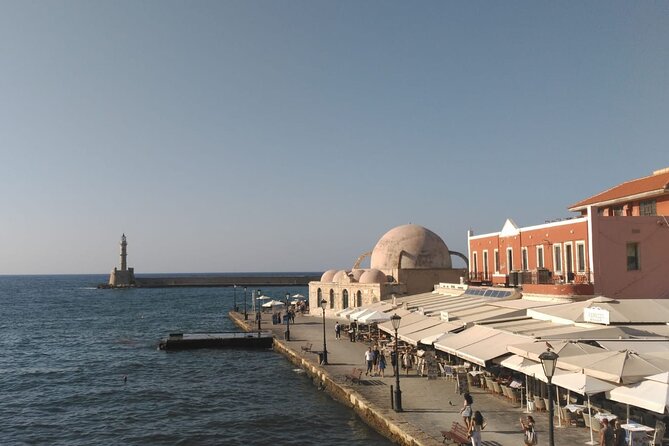
At Akti Tompazi, you’ll find the Yali Mosque. It was built during the Ottoman period in the 17th century and served the local Muslim community.
This stop changes the rhythm of the walk because it reminds you Chania wasn’t shaped by one power or one faith tradition. You’re moving through a city where different communities left real structures behind.
As with any religious site, keep the tone respectful and dress appropriately. And because this is part of a puzzle, don’t spend so long here that you lose the thread of the story.
Stop 5: Kondilaki and the Chania synagogue—what 15th-century influence looks like
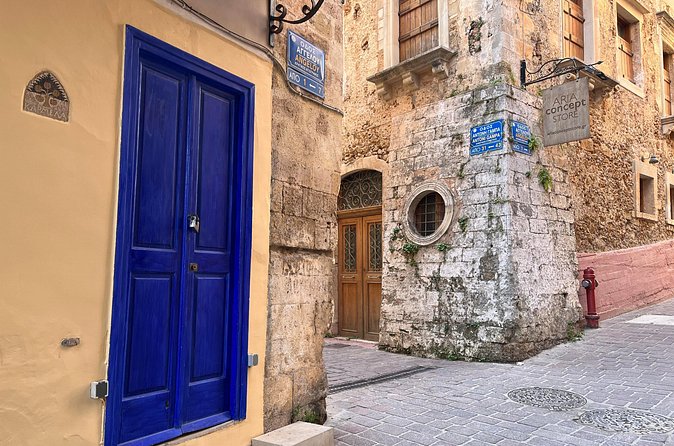
Next is the synagogue near Kondilaki. The synagogue’s history stretches back many centuries, and it’s tied to a Venetian period in the 15th century when Chania was under Venetian rule. The Jewish community in Chania has a long presence, and this building played a central role in religious and cultural life.
For me, the value here is contrast. Your route isn’t only “top sights.” It’s a path through different layers of Chania’s identity, placed close enough together that your brain can connect the dots while you walk.
Again, about 10 minutes is suggested. If the puzzle gives you a question that depends on what you see nearby, take it seriously—but don’t turn the stop into a research project.
Stop 6: Theotokopoulou street—where the story meets the streets
After the landmark stops, you’ll enter a more street-level experience with Theotokopoulou. It’s a street in Chania’s Old Town, known for its traditional architecture and charming atmosphere.
This is a good pause point because street sections are where you notice how the city breathes. Shops, corners, and narrow lanes change your sense of direction, which makes them ideal for a puzzle walk.
If you’re tempted to speed through, resist just a bit. This section helps you enjoy the “wandering with purpose” feeling—the whole point of a self-guided route like this.
Stop 7: Πλατεία Τάλω and the Hand Monument (To Heri)—a modern reset
Then you reach Πλατεία Τάλω, where you’ll see the Hand Monument, locally known as To Heri. It’s a contemporary public sculpture: a giant hand rising from the ground, made of metal with a distinctive design.
This stop works because it’s not another religious or historic structure. It’s modern art placed in the middle of a historic city, which gives your brain a quick reset while you’re still in story mode.
Spend a little time here. The sculpture is the kind of landmark you’ll remember later, especially when you compare it to the older streets you saw just minutes before.
Stop 8: Firka Venetian Fortress—defense architecture at the harbor
Next is Ενετικό φρούριο Φιρκά (Firka Venetian Fortress). Built in the 16th century during the Venetian period, it was part of the city’s defensive system and helped protect the harbor entrance and the city itself.
This is a natural “puzzle energy” stop. Fortifications are meant to be looked at from multiple angles, and that fits a clue-based walk that keeps moving you.
Ticket-free and about 10 minutes suggested. If you want the best experience, stand back and take in the whole structure first, then readjust for close details. The phone puzzle likely steers your attention, but you’ll get more out of it if you start broad.
Stop 9: Kanevarou and Sintrivani Square—Venetian and Ottoman buildings together
At Kanevarou, you’ll explore Sintrivani Square. The key idea is that the square is surrounded by well-preserved Venetian and Ottoman buildings, which makes it a strong example of how different eras coexist in Chania’s built environment.
This stop is less about one monument and more about the “frame.” As you look around, you can see how architecture tells you when power shifted and how daily life adapted.
Since this is a puzzle route, give yourself a few minutes to look up and around before you move on. City squares can feel confusing at first, and a slower start saves time later.
Stop 10: Chalidon Cathedral—Venetian-era roots and later changes
The final stop is on Chalidon, at the cathedral. It dates to the Venetian period, with changes and renovations over the years. That evolution matters, because it explains why a single building can look different across decades.
This is a good ending point for the story arc. You’ve gone from harbor landmarks and shipyards to faith sites, modern art, and fortifications. Ending at a cathedral that has evolved over time feels like a fitting close.
When the app directs you to the final location, follow it. The activity notes that you can reach the final stop by following directions from the app, so don’t overthink it—just keep your phone ready until you’re done.
How to pace the walk in busy months (so it stays fun)
If you’re visiting in the busy season, start early. One practical tip I’d follow: begin around opening time so you can enjoy Old Town with fewer people around. It makes a puzzle walk less stressful and easier to do at a lively pace without bumping into everyone.
The story tone is light and can feel a little corny in a way that’s good for a laugh. If you want something serious and solemn the whole time, this might not be your cup of tea. If you want a playful route with real sights and a shared activity, it fits well.
Most of all, don’t treat it like a race. The walk is flexible at each stop, and the point is to connect what you see to what you’re solving.
Who should book this romantic puzzle walk
This works best if you:
- Want to explore Chania’s Old Town without a formal guided lecture.
- Like self-paced activities that still give you structure.
- Travel as a couple, friends, or a small group that wants shared fun.
- Are comfortable using a phone for navigation and interactive clues.
It’s also set up so most people can participate, and the route is near public transportation. If you’re traveling with a service animal, service animals are allowed.
If you’re the type who hates anything phone-based or can’t manage battery life, you should think twice or plan extra support (power bank, cable, and a fully charged device before you start).
Should you book True Love in Chania?
Book it if you want an enjoyable way to link Chania’s harbor landmarks, Venetian-era structures, Ottoman-era sites, and modern art into one walk that feels like a game. At $7.24 per person with free-access stops, it’s good value when you want a structured route that doesn’t cost extra admissions.
Skip it (or be cautious) if you know your phone battery usually drops fast, because the puzzle uses your device and can reset if you log in on a different device. Also skip if you dislike story-driven games and would rather do a straightforward walking tour with a human guide.
In the end, this is a playful way to see a lot of Chania’s Old Town in a short window. If you go in with a charged phone and a bit of patience for the clues, you’ll walk away with memories that feel personal, not just postcard-perfect.
FAQ
How long is the True Love in Chania self-guided puzzle walk?
It lasts about 1 hour 30 minutes to 2 hours (approx.).
What does it cost per person?
The price is $7.24 per person.
What language is the experience offered in?
It’s offered in English.
Is this a guided tour with a person or self-guided?
It’s self-guided using the Questo app, and it’s a private activity where only your group participates.
Where do I start and where does it end?
The start is Splantzia, Chania 731 32, Greece, and the end is Tsouderon, Chania 731 32, Greece.
Do I need to buy tickets for the stops?
All the listed stops show admission tickets as free.
What are the opening hours for the experience?
The listed daily hours are 8:00 AM to 6:00 PM.
What do I need on my phone before I begin?
Bring a charged phone, download the Questo app, and create an account using the same email you used to purchase. Then follow the instructions in the app.
Can I get a full refund if I cancel?
Yes. You can cancel up to 24 hours in advance for a full refund.
Is it near public transportation and are service animals allowed?
The experience is near public transportation, and service animals are allowed.