REVIEW · ISTANBUL
Romantic Night Cruise Live Violinist
Book on Viator →Operated by Golden City Tours · Bookable on Viator
A 2-hour cruise can still feel like a lot. You’ll glide along the Bosphorus while a live violinist adds atmosphere, then top it off with a glass of wine as the skyline shifts from dusk to night. I like this setup because it turns classic Istanbul landmarks into something you can actually enjoy slowly, with room to talk instead of hurrying through crowds. The main thing to consider is that this experience depends on good weather, so a cloudy or rough evening can affect the plan.
What I really like: first, the combination of live violin and the water’s soundscape. It makes the whole ride feel curated for romance without being overly flashy. Second, you get a practical “views + comfort” format: they handle the details, you just show up at the pier, and you’re back where you started. One possible drawback is time: at around 2 hours, you’ll see plenty from the boat, but it’s not the kind of tour where you can linger forever at each stop.
If you’ve got your timing right and you’re prepared for a short-and-sweet evening, this is a strong value for Istanbul’s most photogenic stretch.
In This Review
- Highlights You’ll Care About
- The Real Reason This Cruise Feels Romantic
- Finding Your Way: Ömer Avni Pier to a Smooth Start
- Bosphorus at Night: Asia Meets Europe, One Strait at a Time
- Dolmabahçe Palace and Çırağan Palace: Ottoman Power, Lit Up
- Dolmabahçe Palace
- Çırağan Palace
- Ortaköy and the Bosphorus Bridge: Street Energy Meets Big Engineering
- Bebek and the Fatih Sultan Mehmet Bridge: The Skyline’s Second Act
- Fortresses at the Narrowest Point: Anadolu Hisarı and Rumeli Hisarı
- Anadolu Hisarı (Anatolian Fortress)
- Rumeli Hisarı (Rumeli Fortress)
- Kucuksu and Beylerbeyi: Gardens and Palace Life Under the Bridge
- Küçüksu Palace
- Beylerbeyi Palace
- Maiden’s Tower, Galata Tower, and Galata Bridge at Night
- Maiden’s Tower (Kız Kulesi)
- Galata Tower
- Galata Bridge
- What the Live Violin and Wine Actually Change
- Price and Value: Is $60.47 a Good Deal?
- Should You Book This Bosphorus Night Cruise?
- FAQ
- How long is the Romantic Night Cruise Live Violinist?
- What is the price per person?
- Where do you meet, and do you return there?
- Is a mobile ticket provided?
- Is the tour dependent on weather?
- Does the cruise include anything to drink?
- How big is the group?
- What is the cancellation policy?
Highlights You’ll Care About
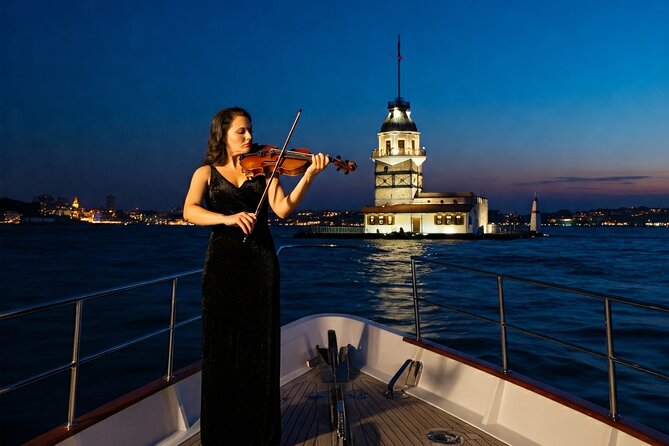
- Live violin performance paired with Bosphorus night views
- A glass of wine included, with more options from the yacht’s menu
- Comfort touches like blankets when it gets chilly
- Scenic route that visually links palaces, fortresses, and bridges
- Small group size: up to 25 travelers
The Real Reason This Cruise Feels Romantic
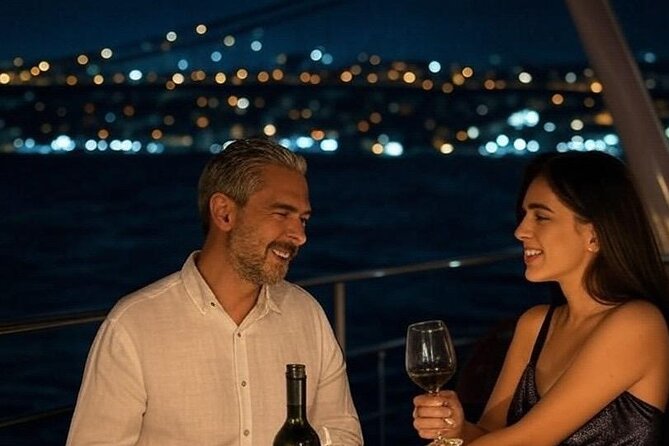
This isn’t just sightseeing from a boat. It’s an “on-purpose” atmosphere. When a live violinist plays while you’re moving across the Bosphorus, the music doesn’t compete with the city noise—it rides the quiet parts and makes the night feel intentional. Add a glass of wine and suddenly you’re not thinking about logistics or schedules. You’re thinking about the view, the moment, and getting a good photo that doesn’t look rushed.
Istanbul’s waterfront is already dramatic, but night changes everything. Lights reflect on dark water, palace facades look softer, and the bridges turn into glowing lines you can follow with your eyes. That’s exactly the kind of payoff you want when you’re only in town for a limited number of evenings.
One practical note: because it’s only about 2 hours, you’ll get a lot of “big picture” moments rather than deep time in any single place. If you’re the type who needs museum-level detail, pair this with a daytime palace visit. For an evening reset—this is excellent.
You can also read our reviews of more tours and experiences in Istanbul.


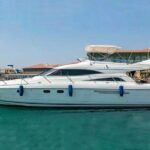
Finding Your Way: Ömer Avni Pier to a Smooth Start
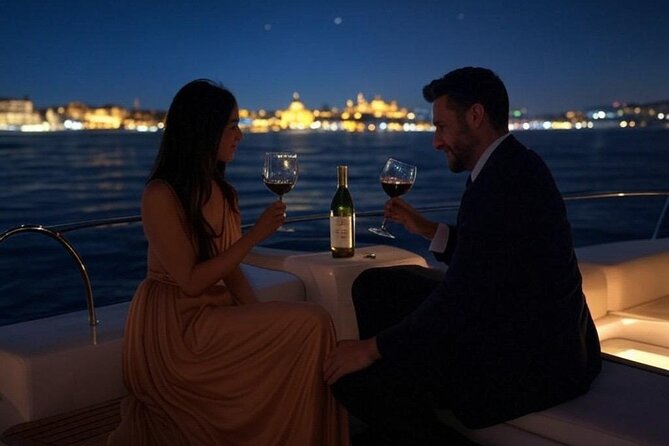
The meeting point is at Ömer Avni, İskele Yolu No:30 in Beyoğlu. It’s the kind of location that makes sense for a night plan: you’re close to the European-side energy without having to cross the city for something that lasts just a couple hours.
The tour uses a mobile ticket, and you end up returning back to the same meeting point. That matters more than people think. In Istanbul, where travel time can expand fast, “back where you started” is a gift.
One detail I especially appreciate from how the experience is run: after booking, they contact you via WhatsApp with the details. That helps you feel confident you’re at the right pier and keeps the start calm, not chaotic. Also, the group is capped at 25 travelers, so you’re not packed in like a floating bus.
Bosphorus at Night: Asia Meets Europe, One Strait at a Time

The cruise centers on the Bosphorus, also known by its historical name, the Bosporus. This narrow waterway separates Europe and Asia, connecting the Sea of Marmara with the Black Sea. It’s about 30 kilometers long, and the depths are significant—around 60 meters on average, reaching up to 120 meters at the deepest point.
Why should you care? Because the Bosphorus isn’t just scenic—it has real character. The currents run from the Black Sea to the Marmara at the surface, while the flow reverses underneath. That means the water can feel different depending on where you are and when you’re moving. At night, that translates into subtle shifts in reflections and boat motion—enough to make the view feel alive.
You’ll also be in the middle of Istanbul’s most iconic geographic story: a city built around a choke point of trade and travel. From the deck, it’s easier to understand why empires obsessed over these shores.
If you want the best “wow” photos, treat the first part of the cruise like your warm-up: get on the correct side of the boat, then adjust once the light changes and the palaces start looking crisp.
Dolmabahçe Palace and Çırağan Palace: Ottoman Power, Lit Up
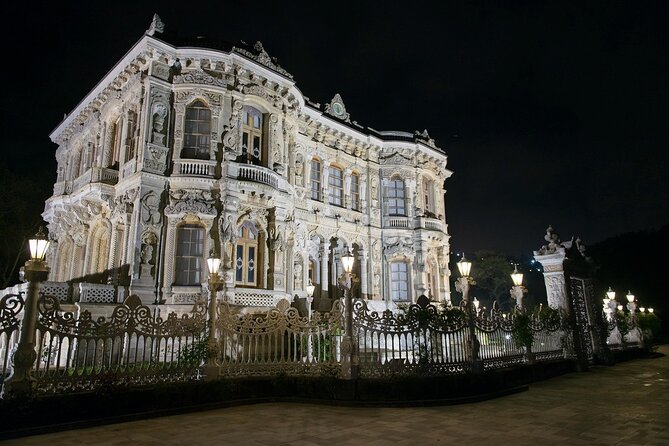
The route includes major palace landmarks along the European side.
Dolmabahçe Palace
Dolmabahçe is an Ottoman palace in Beşiktaş, set on a large area—about 250,000 m²—between Dolmabahçe Street and the Bosphorus. It sits on the left bank at the entrance to the strait from the Sea of Marmara, opposite Üsküdar and Kuzguncuk.
On the water, the palace reads differently than it does from a bus stop. You get the scale first, then the rhythm of the façade lights. It’s the kind of view that makes you pause your phone and actually look.
Çırağan Palace
Çırağan Palace was commissioned by Sultan Abdulaziz and designed by architect Sarkis Balyan. It was completed in 1871 and is made of marble, spread across about 80,000 square meters. The details get darker when you look at its past: after Abdulaziz was deposed, he was imprisoned there for years with his family; later Murat V faced imprisonment for a similar period.
Today, Çırağan also has a modern identity—it was restored and reopened as a luxury hotel in the early 1990s. From the boat, you don’t need to know every chapter to get the atmosphere. You’ll just feel the weight of “this used to be power headquarters” while the lights make it look almost dreamy.
At this stage, I recommend you slow down your expectations: don’t try to zoom in on tiny architectural features. Instead, let the shapes, columns, and illuminated windows do the work. Night viewing is about mood.
Ortaköy and the Bosphorus Bridge: Street Energy Meets Big Engineering
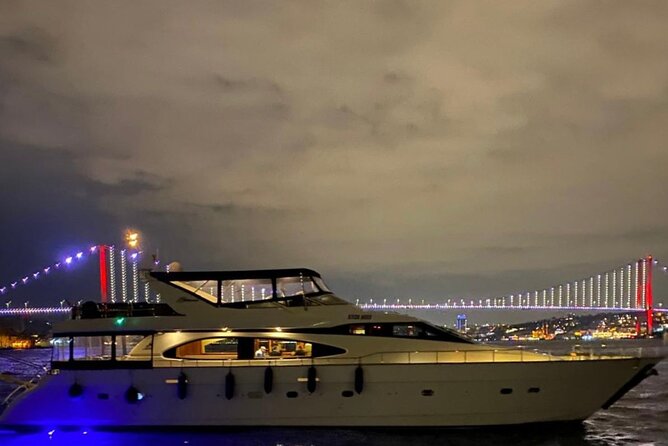
Ortaköy is a Beşiktaş neighborhood on the European side, known for its mix of cafes, shops, and that waterfront “hang-out” feeling. The bazaar area is lively at all hours, with an intellectual-market vibe and plenty of restaurants and bars. It’s worth knowing that the market movement picks up after 10:00 am, so at night it’s more about the shoreline atmosphere than browsing early goods.
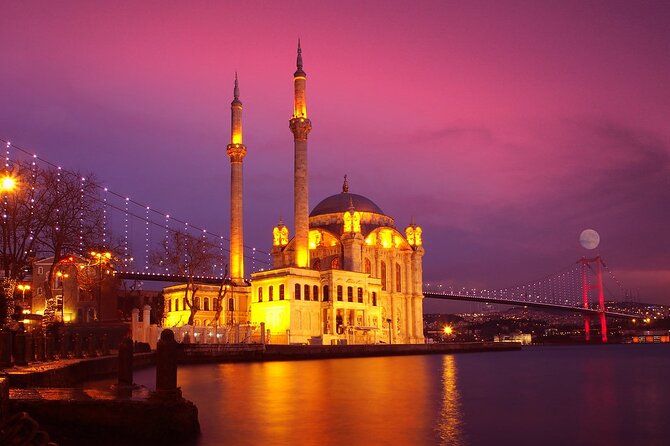
The cruise also brings you near Ortaköy’s landmark area: the foot of the Bosphorus Bridge on the European side, with the opposite foot on the Asian side in Beylerbeyi. This is the first bridge built over the Bosphorus. Construction began in 1970, and it opened on 29 October 1973, during the republic’s 50th anniversary.
From the water, bridges are more than “a thing to cross.” They frame the skyline like architecture for your eyes. You’ll see why Istanbul’s bridges have become part of the city’s visual identity, not just its transport network.
Bebek and the Fatih Sultan Mehmet Bridge: The Skyline’s Second Act
Bebek is another European-side stop along the Bosphorus. The neighborhood name literally translates as baby, tied to its reputation for being an attractive spot on the water. It’s historically Ottoman, and today it’s known for waterside mansions and the look of grand homes set against the Bosphorus edge.
On a cruise, Bebek often feels like a calmer counterweight to the busier zones. The waterfront looks more residential, and that gives your night a nice pacing: you go from monumental palaces to a more human-scale shore.
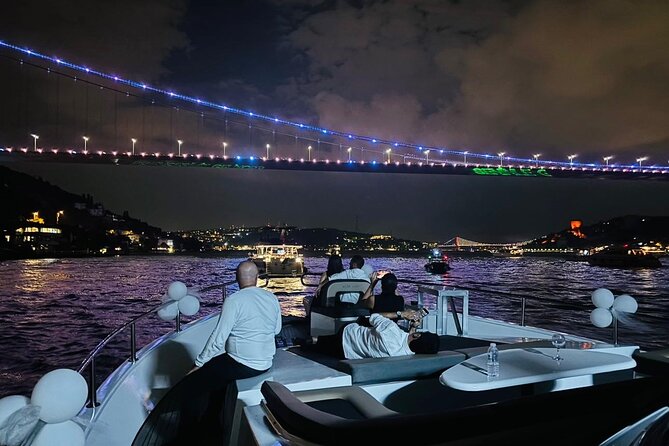
Then comes the Fatih Sultan Mehmet Bridge, Istanbul’s second Bosphorus bridge. Construction started in 1986, and it opened on 3 July 1988. It’s a steel suspension bridge and ranks among the world’s larger examples. Functionally, it takes a large portion of trans-Bosphorus traffic in addition to the Bosphorus Bridge and the ferries.
Visually, it’s memorable because the bridge becomes a graphic line across the night. If you’re into photography, this is usually where you can get a clean “bridge + water reflections” composition without the buildings being too chaotic.
Fortresses at the Narrowest Point: Anadolu Hisarı and Rumeli Hisarı
If you’ve ever wondered why the Bosphorus was so strategically important, the fortresses make the answer obvious.
Anadolu Hisarı (Anatolian Fortress)
Anadolu Hisarı sits in Beykoz on the Asian side, at the narrower point of the Bosphorus. It was built in 1395 by Beyazıt I and consists of a citadel and exterior castle walls. After the conquest of Istanbul, the fortress lost much of its strategic importance and was converted into a military hospital.
Restoration took place between 1991 and 1993, and it was converted into a museum, though it is not open to the public. Today it functions as an open-air site, where only outer walls can be visited, and the road passes through it.
From the cruise, you’re not there to tour the interior—you’re there to read the structure from the water. And at night, that’s exactly what works: you see mass, walls, and location more clearly than small details.
Rumeli Hisarı (Rumeli Fortress)
Rumeli Hisarı sits directly across from Anadolu Hisarı in Sariyer. Sultan Mehmet the Conqueror ordered it in 1453, and construction was completed in just three months. Before the conquest, it was used to protect against naval attacks; after, it was used for inspection of maritime traffic.
In modern times, the fortress became known for summer concerts, and it serves as an open-air theater and museum. Again, the cruise experience doesn’t require you to know all that. You’ll simply recognize it as the other half of the story—the pair that turns a strait into a guarded corridor.
This section is one of the most interesting parts of the whole trip because you can feel how the Bosphorus went from geography to control.
Kucuksu and Beylerbeyi: Gardens and Palace Life Under the Bridge
The route also includes Kucuksu and Beylerbeyi—places that help balance the heavy fortress mood with something more graceful.
Küçüksu Palace
Küçüksu Palace is a small Ottoman summer palace on the Bosphorus coast road between Üsküdar and Beykoz. It was ordered by Sultan Abdulmecit and designed by architect Nikogos Balyan. It attracted sultans during the Ottoman period for relaxation thanks to its excellent Bosphorus view.
In the Republican period, it opened as a museum. On a night cruise, you can usually appreciate these smaller palaces for their silhouette and waterfront placement, even if you’re not stepping off the boat.
Beylerbeyi Palace
Beylerbeyi Palace is an Ottoman summer palace complex built in the 1860s on the shores of the Bosphorus, right under the Bosphorus Bridge. Architect Sarkis Balyan designed it, and it combines elements of renaissance, baroque, and other styles.
The main building has two storeys on a stone base, with halls and rooms spread across a total complex area of about 2,500 square meters. You also shouldn’t miss the palace garden: the route description highlights a lily pond and a large garden, which is a huge reason this palace feels different from the more formal, ceremonial feel of bigger landmarks.
If you’re the type who likes your night tours to feel romantic and not just impressive, this is where the cruise starts to feel personal. Palaces plus gardens plus night lighting is a winning combo.
Maiden’s Tower, Galata Tower, and Galata Bridge at Night
This part of the evening shifts from palace-and-fortress scale to iconic skyline silhouettes.
Maiden’s Tower (Kız Kulesi)
Maiden’s Tower is a distinctive Bosphorus skyline feature on a tiny island about 200 meters from the shore of Üsküdar. It’s tied to legends, but the most famous one involves a sultan, his daughter, and an oracle predicting she’d die from a snake bite on her 18th birthday. A tower was built to protect her, but the tragedy still arrived on her birthday.
Even if you don’t care about legends, the tower is visually unforgettable—an isolated shape that makes the Bosphorus feel mythic.
Galata Tower
Galata Tower was built by the Genoese in 1348. It’s a nine-story tower that rises to about 66.90 meters and was the tallest building in the city at the time. In Ottoman times it served different roles, including a fire observatory and a jail. A dramatic moment in its story: Hezarfen Ahmet Çelebi reportedly glided from the top of Galata Tower to Üsküdar with self-constructed wings in 1632.
The conic roof was damaged in a storm in 1875, later restored in the 1960s, and the wooden interior was replaced with concrete. Today it’s open to the public, with a restaurant and café on the upper floor.
From the deck, you get the shape and skyline role. You don’t need to climb it to appreciate why this tower keeps showing up in Istanbul postcards.
Galata Bridge
Finally, the cruise includes the Galata Bridge area across the Golden Horn. The history begins in 1845 and the bridge has been rebuilt over time. It was damaged by fire in 1992, and a new bridge was built. The earlier, beloved bridge was moved to Halic.
The bridge is busy in daily life and also famous in Istanbul’s culture. At night, the sense you get is the same: restaurants, cafes, and pedestrian energy below while tram and pedestrian traffic move above. Even without stepping off, you’ll feel why it’s a staple.
What the Live Violin and Wine Actually Change
This is where the experience beats many “standard sightseeing” cruises.
The live violin adds more than decoration. It changes your pace. You tend to look up when music starts. You pause during quieter sections. You stop thinking about being efficient and start being present.
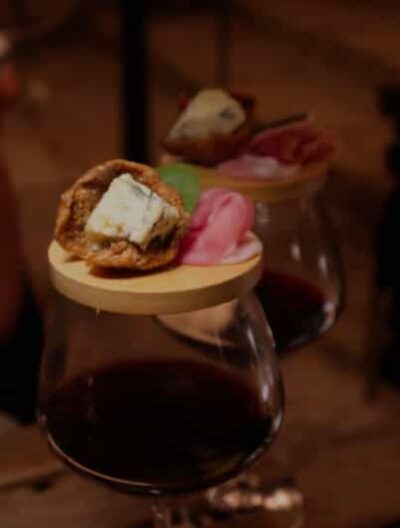
Then there’s the wine. A glass is included, which is a simple, clear value choice. It avoids the weird feeling of paying separately for something that should be part of the mood. If you want more, you can order from the yacht’s menu, which gives you flexibility without forcing an expensive drink package.
And when the air turns cold, comfort matters. One standout in the way this is run: they provide blankets if you need them. That’s the kind of small detail that makes a couple feel looked after instead of just sold a ticket.
Price and Value: Is $60.47 a Good Deal?
At about $60.47 per person for roughly 2 hours, the math works best if you want a romantic evening without planning a full itinerary.
You’re paying for three big things:
- a structured route that connects major waterfront landmarks you’d otherwise chase by car or ferry
- live violin plus a included glass of wine
- the convenience of a small-group setting capped at 25 and a return to the same pier
If you’re already planning one or two paid sights anyway, this can be a smart way to use your last evening in Istanbul for atmosphere and photos. If your goal is museum depth or long walking time, this may feel too short.
So here’s the simple way I think about it: treat this as a night “experience wrapper” around Istanbul’s most iconic waterfront. If that’s your goal, the price makes sense.
Should You Book This Bosphorus Night Cruise?
Book it if:
- you want romantic, low-effort sightseeing with a real evening mood
- you like music included in your itinerary, not added later
- you’d rather spend 2 hours enjoying the views than losing time on complicated travel between landmarks
- you’re traveling with a partner or in a small group and want a calmer experience
Skip it or plan an alternate if:
- you’re very weather-dependent and you’re visiting during a season you’re not confident about
- you need long stops and extensive indoor time, because this is a cruise-focused overview rather than a deep dive into buildings
FAQ
How long is the Romantic Night Cruise Live Violinist?
It runs for approximately 2 hours.
What is the price per person?
The price is $60.47 per person.
Where do you meet, and do you return there?
You meet at Ömer Avni, İskele Yolu No:30, 34427 Beyoğlu/İstanbul, Türkiye, and the activity ends back at the meeting point.
Is a mobile ticket provided?
Yes, the experience uses a mobile ticket.
Is the tour dependent on weather?
Yes. It requires good weather, and if it’s canceled due to poor weather you’ll be offered a different date or a full refund.
Does the cruise include anything to drink?
Yes. You’ll receive a glass of wine, and you can order more from the yacht’s menu.
How big is the group?
There’s a maximum of 25 travelers.
What is the cancellation policy?
You can cancel for a full refund up to 24 hours before the experience starts. If you cancel less than 24 hours before, the amount paid is not refunded.