REVIEW · BERLIN
Romantic Berlin Rickshaw City and Photo Tour – incl. pick-up
Book on Viator →Operated by Rikscha & Bier Bike & Party Beer Bike - Leo Rickshaw Tours · Bookable on Viator
Berlin looks different at rickshaw height. This Romantic Berlin Rickshaw City and Photo Tour strings together major landmarks with a photographer and the kind of comfort that keeps your ride enjoyable, even when Berlin turns chilly. I especially like how it blends postcard icons with serious memory sites, so your photos feel more like stories.
I love the private setup for up to two people, because it keeps the pace feeling personal instead of rushed. I also love the practical extras: warm blanket, WiFi onboard, music on request, and alcoholic beverages to set the mood. One thing to consider: the whole outing runs only about 1–2 hours, so if you want long, slow time inside major attractions, you’ll likely need to plan follow-up visits.
In This Review
- Key things to know before you book
- Rickshaw romance plus real photo support
- Price and value: what $183.35 buys for two
- Getting picked up near Brandenburg Gate
- Brandenburg Gate to Reichstag: classic stone and the big turning points
- T-34 memorial and the park feel of Berlin’s English Garden area
- Potsdamer Platz and the city reset after division
- Checkpoint Charlie and the north-south story of Friedrichstraße
- Gendarmenmarkt and Bebelplatz: theaters, parliaments, and book burnings
- Neue Wache and Museum Island: memorials and UNESCO-class landmarks
- The New Synagogue ruins, Nikolaiviertel old-town feel, and Alexanderplatz energy
- Weather, comfort, and what to wear for a short ride
- One potential snag: short time, uneven depth, and drink service expectations
- Should you book this rickshaw photo tour?
- FAQ
- How many people is the tour for?
- Is pickup included?
- How long does the tour last?
- What language is the tour offered in?
- Is the Reichstag admission ticket included?
- Are any attractions included for free?
- What photo-related items are included?
- What’s included for comfort and drinks?
Key things to know before you book
- Pickup near Brandenburg Gate is included (within a 2 km radius)
- Private rickshaw for up to 2 people means you’re not sharing with strangers
- Photographer is included, so you’re not stuck playing cameraman the whole time
- Warm blanket, WiFi, and music on request help when weather and timing don’t cooperate
- A history-heavy route mixes icons like Brandenburg Gate with sites like Topography of Terror
- Most stops are brief, so it works best for highlights and photos, not deep museum time
Rickshaw romance plus real photo support
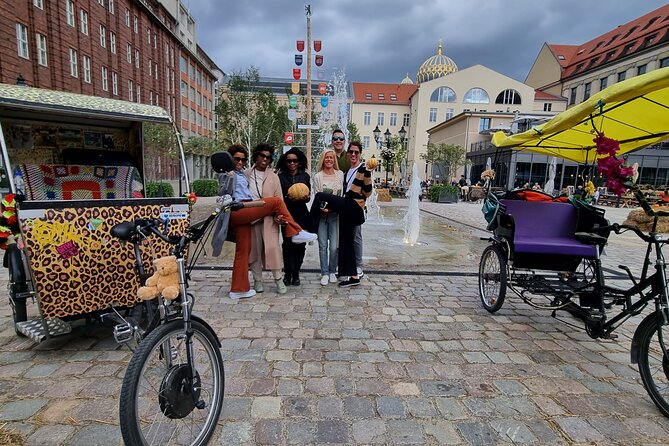
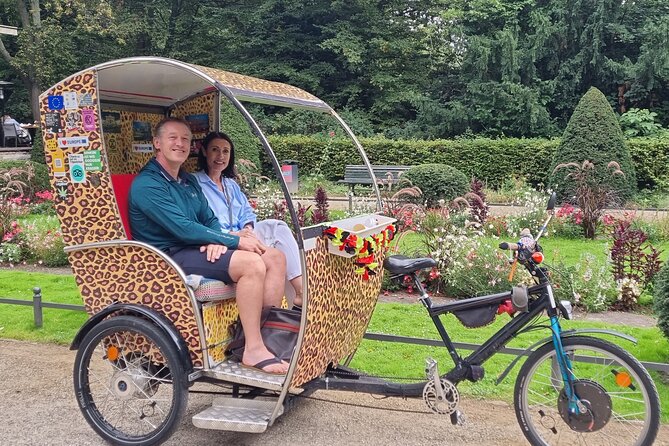
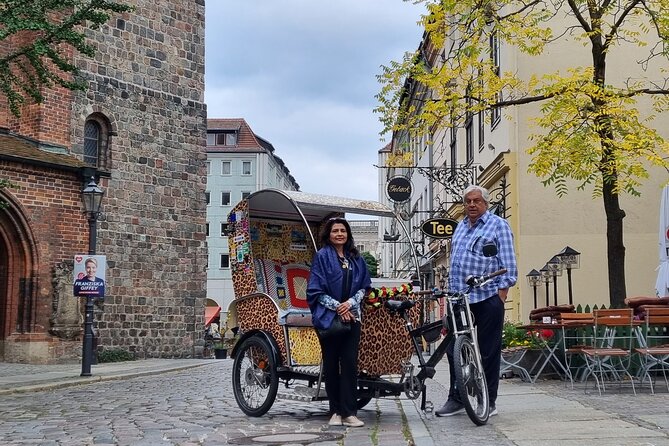
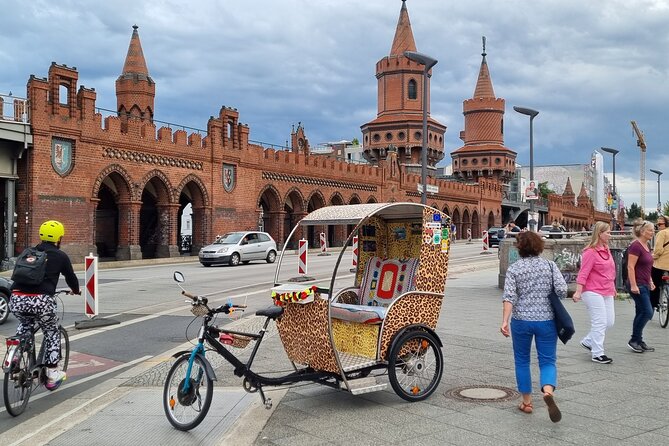
A rickshaw tour in Berlin has a built-in advantage: the city’s big sights feel closer when you’re at street level, not wedged into tour-bus crowds. And here, the romance is not just marketing. You get onboard comfort items that make the ride easier, plus a photographer included in the package so your couple shots don’t have to rely on a stranger with shaky hands.
The other clever part is the mix of places. You’ll see famous architecture like Brandenburg Gate and the Reichstag, but you’ll also pass through memory and accountability spaces like Topography of Terror and the Checkpoint Charlie area. That contrast matters. Berlin is one of those cities where the story is in the details, and a fast-moving route lets you get your bearings without feeling like you’re studying a textbook.
You can also read our reviews of more tours and experiences in Berlin.

Price and value: what $183.35 buys for two
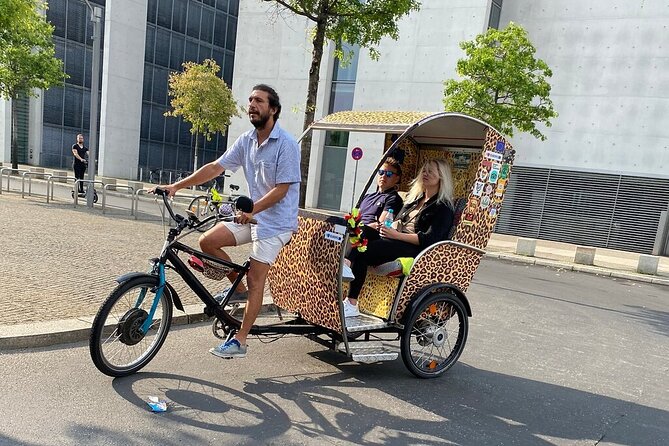
At $183.35 per group (up to 2), you’re paying for a private, moving experience with extras that would cost extra if you booked them separately. In this case, the value comes from the bundle: private transportation, a photographer, warm blanket, WiFi onboard, music on request, a travel guide, and alcoholic beverages.
Is it budget-friendly? Not really. But for a short window—about 1 to 2 hours—it can still be good value because you’re not spending time coordinating multiple transport steps or hunting down photo help. If you’re traveling as a couple, the per-person math improves fast. If you’re a solo traveler, the group price still means you’ll want to be sure you’ll use the photo and comfort pieces rather than just riding past buildings.
Getting picked up near Brandenburg Gate
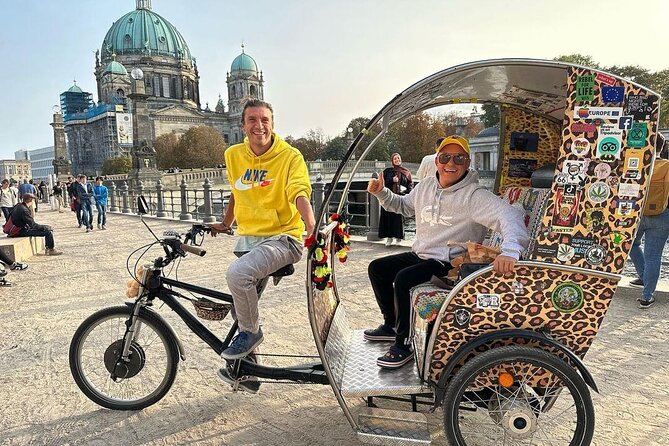
The meeting point is Pariser Platz 4A (right by the Brandenburg Gate area). Pick-up is included within a 2 km radius from the Brandenburg Gate. If you’re farther than that, there’s a charge of 10 € per km, paid on the spot.
You’ll also return back to the meeting point. That matters because it reduces the stress of planning the last mile after you’ve already spent your energy taking photos. And since the tour is private, you can expect your guide to keep the route efficient rather than trying to funnel a bigger group into a perfect photo lineup.
Brandenburg Gate to Reichstag: classic stone and the big turning points
Your route starts where Berlin’s most famous stage lights up: the Brandenburg Gate. This sandstone masterpiece of German classicism was built between 1788 and 1791 based on designs by Carl Gotthard Langhans the Elder, inspired by the Propylaea of the Athens Acropolis. It wasn’t just decorative. King Friedrich Wilhelm II wanted a grand architectural finishing touch for the boulevard Unter den Linden.
Then comes the Reichstag building, a place where German history doesn’t sit quietly behind glass. On November 9, 1918, SPD politician Philipp Scheidemann proclaimed the republic from the balcony at the west portal. On February 27, 1933, the Reichstag fire destroyed the plenary hall and the dome. And later, on April 30, 1945, a red flag of the Soviet Union was hoisted by two Red Army soldiers—an unmistakable symbol of the end of the Third Reich.
One practical note: the Reichstag admission ticket is not included. So you’ll get the exterior impact and the story context, but you shouldn’t expect this to replace a full museum or interior visit.
T-34 memorial and the park feel of Berlin’s English Garden area
From power and politics, the tour shifts to a very different kind of emotional geography. You’ll see a Soviet memorial with T-34 tanks flanking the area, plus a bronze statue of a Red Army soldier holding a rifle on his shoulder. Names of fallen Soviet soldiers are listed on the pillars behind. In the memorial’s rear area, there are graves of around 2,500 soldiers.
This stop is one of those moments where your guide’s tone matters. A private ride helps because you can hear the context without competing for attention. And it also helps that you’re not stuck reading everything at one distance. You get to absorb the meaning and still keep moving.
After that, the route heads into Berlin’s big green space concept, described as an English public park developed from a former hunting ground. At the end of the 17th century, Elector Friedrich III created a pleasure park for the population. Over time, it was redesigned, and between 1833 and 1838 it became an English public park shaped by the garden designer Peter Joseph Lenné.
This is also where the tour’s “photos plus comfort” idea pays off. The park is described as covering around 200 hectares, and you’ll pass by sights such as monuments and memorials, bridges, the Victory Column, the Federal President’s Office, and the House of World Cultures. There’s also an English Garden around a pond—an area that can look calm and romantic, even when Berlin is running on schedule.
Potsdamer Platz and the city reset after division
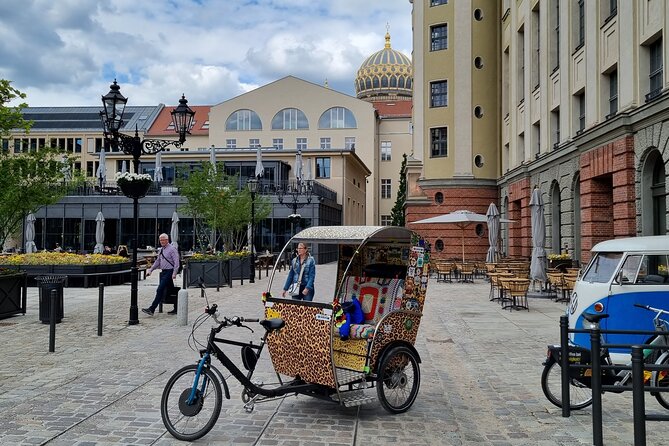
Potsdamer Platz is the kind of place that always looks good in photos. It was planned as an entire district, and the idea worked: cafes, cinemas, and shops are used by both Berliners and tourists. The modern planning created something like a new center built between Potsdamer Platz and Reichpietschufer on 6.8 hectares, right where the city needed reinvention.
From here, the tour naturally leans into Berlin’s 20th-century story. You’ll also reach Topography of Terror, known in that way since 1987. The area was central to planning and control of many Nazi crimes from 1933 to 1945. Key institutions of the Nazi terrorist apparatus of the SS and police were located here, including the Secret State Police Office, the Reich Leadership SS, and the Reich Security Main Office. This is one of the stops where your photos will look like more than architecture.
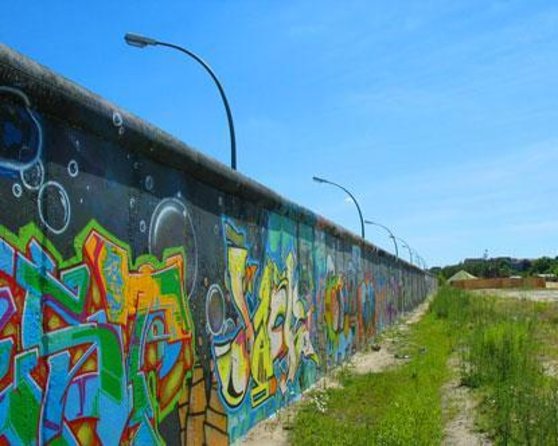
Nearby, you’ll pass the Martin-Gropius-Bau, which is dedicated to cultural history, contemporary art, and photography. The Wall stop is also on the route. Berlin’s wall story isn’t one scene—it’s a chain of fragments. Even brief views can help you understand where the city used to be cut in half.
Checkpoint Charlie and the north-south story of Friedrichstraße
Checkpoint Charlie is the stop that makes Berlin instantly recognizable. During the division of Berlin, it was the most famous border crossing among the three border points controlled by the Americans, along with the Glienicke Bridge. The other two were Checkpoint Alpha (Helmstedt-Marienborn) and Checkpoint Bravo (Dreilinden-Drewitz).
The rules were strict. Passage was only allowed for foreigners, employees of the permanent representation of the FRG in the GDR, and GDR functionaries. Even without going deep into documents, this stop gives you a clear sense of how borders shaped daily life.
From there, you’ll head toward Friedrichstraße. The street runs through Berlin as a north-south axis, and after the fall of the Wall, a popular shopping mile grew between Checkpoint Charlie and Friedrichstraße station. In practical terms, this is where the tour shifts again from heavy history to present-day Berlin energy—still worth photographing, just less heavy on the emotional weight.
Gendarmenmarkt and Bebelplatz: theaters, parliaments, and book burnings
Gendarmenmarkt is one of Berlin’s most refined squares. It was built at the end of the 17th century based on plans by Johann Arnold Nering. The area attracted French immigrants, mainly French Protestants (Huguenots). The square’s name changed over time: Esplanade, Lindenmarkt, Friedrichstädtischer Markt, and Neuer Markt, before it became Gendarmenmarkt in 1799 because the guard and stables of the guard regiment Gens d’armes were located there.
You’ll also see the German Cathedral area with the permanent exhibition Ways – Irrwege – Detours. It covers the historical development of liberal parliamentary democracy across five floors. That’s a smart add-on because it ties the story to politics and institutions, not only to conflict.
And then there’s the concert hall on Gendarmenmarkt, a masterpiece of classical architecture and one of Karl Friedrich Schinkel’s main works. A small comedy house opened here in 1776 at the instigation of Frederick the Great, built from plans by Prussian building director Johann Bouman the Elder. Renaming the venue to the Royal National Theater in 1787 highlighted its rise to a leading theater in the country.
Right nearby is Bebelplatz, inside Berlin’s museum center. This is where Nazis desecrated the place with the burning of books. On May 10, 1933, more than 20,000 books were burned there. The Nazi logic was that these volumes represented a non-German spirit—names included Erich Kästner, the Mann family, Magnus Hirschfeld, Lion Feuchtwanger, Karl Marx, Else Lasker-Schüler, and almost 400 other authors, plus Heinrich Heine. The memorial commemorates the act, and Heine’s warning still lands hard: where you burn books, you also burn people.
Neue Wache and Museum Island: memorials and UNESCO-class landmarks
Berlin has memorials that aren’t just background. Neue Wache sits right next to the armory, which houses the German Historical Museum. The building was constructed between 1816 and 1818, designed by Karl Friedrich Schinkel. Since 1993, it has served as the central memorial in the Federal Republic of Germany for the victims of war and tyranny.
After that, you move toward Museum Island, a UNESCO World Heritage Site and one of Europe’s standout museum complexes. Even if you don’t go in, the fact that it’s recognized at that level helps you understand Berlin’s ambition: this is not only a city of monuments, it’s a city of institutions that preserve and interpret meaning.
You’ll also pass the Berlin Cathedral, described as a must for church lovers due to its distinctive design features. Next comes Lustgarten, a spacious square that once belonged to the Berlin City Palace and is now a popular hangout space with Berliners and visitors.
The New Synagogue ruins, Nikolaiviertel old-town feel, and Alexanderplatz energy
Berlin keeps a long memory. The New Synagogue on Oranienburger Strasse is a strong example: what was left of it shines brightly today. It used to be the largest and most important synagogue in Germany, so it carries weight even before you look at the details.
Then the tour shifts into older streets and neighborhood scale at Nikolaiviertel, Berlin’s first and oldest residential area. Along with the Nikolaikirche, the district offers old-town flair with historic houses, restaurants, and coffee shops. If you want a mental exhale after the bigger story stops, this part of the route is a good reset.
Finally, you reach Alexanderplatz, one of Berlin’s most famous squares. It has been a major stage since the 1920s, through GDR times, and today. It stays lively, and it’s one of those places that makes Berlin feel like a living city rather than a museum.
Weather, comfort, and what to wear for a short ride
Because this is a rickshaw tour, weather matters. The tour requires good weather, and the warm blanket is there for a reason. Even if you think you can tough it out, Berlin cold can bite fast when you’re moving slowly. Wear layers, bring gloves if you tend to get cold hands, and keep your phone charged before you hop on.
The music on request feature is also a nice touch. It’s not a gimmick if you’re using the ride to create a mood for photos and videos. WiFi onboard helps too, especially if you want to back up images or share right after you capture them.
One potential snag: short time, uneven depth, and drink service expectations
The big tradeoff with a 1–2 hour city ride is simple: you cover many highlights, but you won’t linger at each one. That’s fine if you’re building a first-day plan and want to see where to return later. It can feel limiting if you expected the rickshaw to be a long, slow, sightseeing-by-sightseeing experience.
Also, guides can vary in how much background they give at each stop. If you’re the type who wants a lot of detail for every building, plan to complement the ride with reading on your own afterward. And while alcoholic beverages are included, the way they’re served may not feel fancy; think of it as part of the ride atmosphere, not a cocktail program.
Should you book this rickshaw photo tour?
Book it if you want a couple-friendly Berlin highlights route with real photo help. This tour fits best when you’re short on time, you don’t want to juggle multiple transport options, and you want your first views of Brandenburg Gate, Checkpoint Charlie, and the museum island area without stress.
Skip it (or treat it as a starter) if you want lots of museum hours or you’re expecting long, deep explanations at every stop. In that case, you’ll still enjoy the views, but you’ll likely want to plan separate time for museums and interiors.
If weather is questionable, remember the tour needs good conditions. On poor weather days, you should expect the operator to offer a different date or a full refund. And since it’s private and cancellable up to 24 hours in advance, you can often play it smart.
FAQ
How many people is the tour for?
This is a private tour/activity. The group size is up to 2 people.
Is pickup included?
Yes. Pick-up within a radius of 2 km from the Brandenburg Gate is included in the price. More than 2 km costs 10 € per km, paid on the spot.
How long does the tour last?
The duration is about 1 to 2 hours.
What language is the tour offered in?
The tour is offered in English.
Is the Reichstag admission ticket included?
No. The Reichstag admission ticket is not included.
Are any attractions included for free?
Several stops are listed as free, including Potsdamer Platz, Topography of Terror, and Checkpoint Charlie.
What photo-related items are included?
A photographer is included, and the tour also includes WiFi on board and a travel guide.
What’s included for comfort and drinks?
You’ll get a warm blanket, WiFi on board, music on request, a travel guide, photographer support, and alcoholic beverages.