REVIEW · OSAKA
Sagano Romantic Train & Arashiyama, Kiyomizudera, Fushimi Inari Taisha Day Tour
Book on Viator →Operated by LIMON Tours · Bookable on Viator
Four stops. One stress-light day.
This full-day outing links Osaka with two UNESCO Kyoto icons and a classic railway moment in Sagano, using an air-conditioned bus with free Wi‑Fi and a guide who keeps the day moving. You’ll hit Fushimi Inari, wander Arashiyama, climb into Kiyomizu-dera, then ride the nostalgic Sagano Romantic Train for river views.
I love how the plan reduces decision fatigue. It strings together Kyoto’s biggest hits without you needing to re-map every transfer, and that alone is worth something on a limited schedule. I also like the added “slow down” factor of the Sagano Romantic Train—it’s short, but it changes the vibe from walking crowds to quiet scenery.
One heads-up: this is a packed day. You’ll walk a fair amount (including some noticeable inclines at points), and the train can feel crowded depending on season and timing.
In This Review
- Key Highlights You’ll Feel the Moment You Arrive
- Kyoto’s Big Names, Without the Transfer Headaches from Osaka
- Price and Logistics: What You’re Really Paying for (and What You’re Not)
- Fushimi Inari Taisha: Torii Gates, Fox Statues, and a 1-Hour-Plus Window
- Arashiyama and the Sagano Bamboo Forest: Cooling Air, Katsura River Views, and Togetsukyo
- Kiyomizu-dera: The Nail-Less Stage and Otowa Waterfall Traditions
- Sagano Romantic Train on the Hozugawa River: Short Ride, Big Feeling
- Timing, Crowds, and Walking: How to Set Yourself Up for a Smooth Day
- Lunch Choices: The Japanese Feast Option (and the Vegetarian Reality Check)
- Who This Tour Suits Best in Kyoto (and Who Might Prefer Something Else)
- Final Call: Should You Book This Sagano Romantic Train Day Tour?
Key Highlights You’ll Feel the Moment You Arrive
- One guide-managed route through Kyoto’s top stops, so you’re not playing subway roulette
- Sagano Bamboo Forest + river views around Arashiyama, including the Togetsukyo bridge area
- Kiyomizu-dera’s stage and Otowa Waterfall are the kind of sights you remember long after the photos
- Sagano Romantic Train gives you that classic Hozugawa River scenery with a nostalgic feel
- Smallish group size (max 42) helps the day stay organized, even when crowds spike
Kyoto’s Big Names, Without the Transfer Headaches from Osaka
Osaka is a smart launch point for Kyoto. This day tour uses that advantage in a very practical way: you’re not juggling multiple ticket types, train lines, and station navigation across the city. Instead, you follow one schedule, in one direction, with an English-speaking guide and bus transportation ready for the between-stop gaps.
What makes this plan work is the “rhythm.” You start with Fushimi Inari Taisha, shift into nature at Arashiyama, move to landmark views at Kiyomizu-dera, and then end with a scenic train ride along the river. It’s not just a checklist; it’s a nice sequence of Kyoto moods.
And yes, you’re paying for that simplicity. The question is whether it’s worth it for you—which depends mostly on how much time you have in Japan and how much you enjoy planning day-of logistics.
Price and Logistics: What You’re Really Paying for (and What You’re Not)
The price is $82.78 per person for a day that runs about 9 hours. For that money, you typically want three things: smooth transport, entry/tickets handled, and a guide who gives context fast enough that the stops feel meaningful rather than rushed.
Here’s what’s covered:
- Sagano Romantic Train ticket
- Accompanied English-speaking tour guide
- Pickup at designated meeting points
- All-You-Can-Enjoy Japanese feast if you choose the meal option (otherwise you’ll pay for your own food)
- Air-conditioned bus with free Wi‑Fi
Not included:
- Drinks
- Hotel pickup and drop-off (you meet at a listed location)
This is where the value math gets interesting. If you tried to do Fushimi Inari + Arashiyama + Kiyomizu-dera on your own, you’d spend time figuring out timing, transit, and how to avoid bottlenecks. You’re paying to buy back that time—plus the guide adds meaning at each stop.
One real-world advantage showed up repeatedly in the reviews: people liked that the day ran on time and stayed organized. Guides named Hama, Masa, Eric, Akira, Jewel, and Maria were praised for keeping groups moving and making the day smoother. That matters, because Kyoto crowds can turn a “simple transfer” into a long wait.
Fushimi Inari Taisha: Torii Gates, Fox Statues, and a 1-Hour-Plus Window
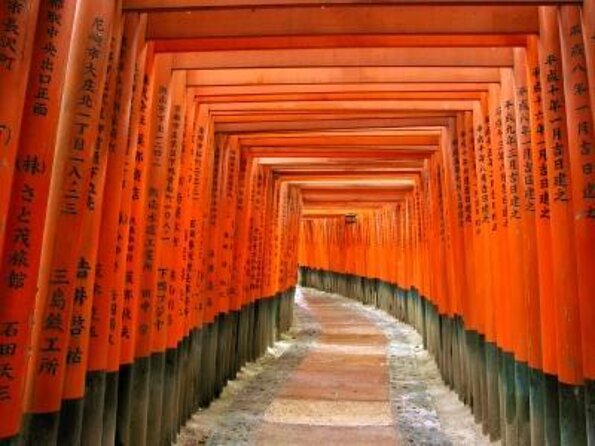
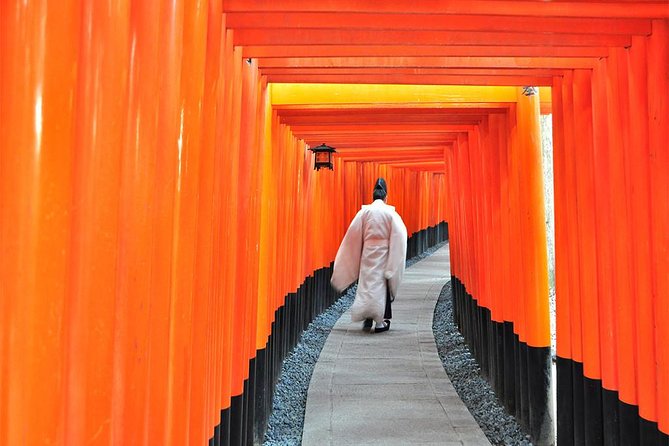
Your first major stop is Fushimi Inari Taisha, free to enter. This is the Shinto shrine linked to the guardian deity of agriculture, and it’s famous for the sea of vermillion torii gates that makes you feel like you’re walking through a tunnel of color.
You’ll have about 1 hour 20 minutes, which is long enough to do the basic highlights without turning it into a marathon. Here’s what I’d focus on during that time:
- Walk into the gate corridors and look for the fox statues (the shrine tradition describes them as spiritual messengers).
- Keep moving steadily rather than stopping every 10 seconds. The views are great, but that’s exactly why the paths fill up.
A practical consideration: this is a famous place, so crowds are part of the deal. The best strategy is to treat it like a stroll with a mission. Get your bearings, see the torii atmosphere, then head deeper just enough to feel the change in density.
If you’re the type who wants the full out-and-back hike up the far routes, this time window may feel short. But for most first-timers, it’s the right amount.
Arashiyama and the Sagano Bamboo Forest: Cooling Air, Katsura River Views, and Togetsukyo
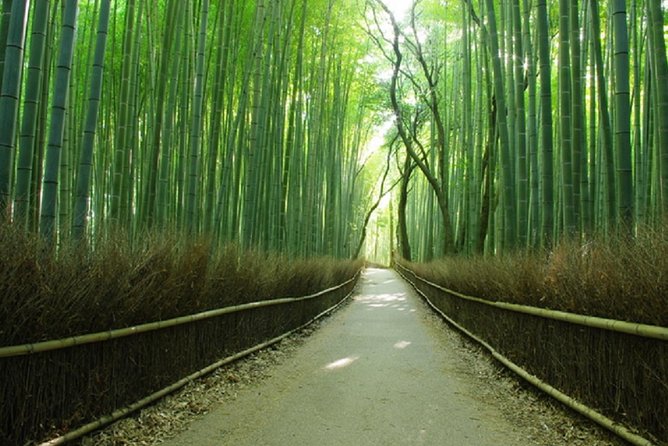
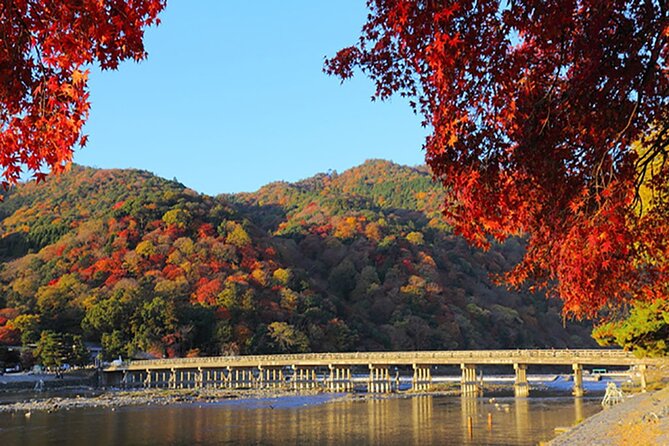
Next comes Arashiyama, a nature spot that’s been popular since the Heian period. Expect a calmer feel right after the torii crowds. This stop lasts about 2 hours and is built around three big experiences: the Sagano Bamboo Forest, walking by the river, and seeing the famous bridge.
What makes Arashiyama special in this tour format is how the time matches the sights:
- Sagano Bamboo Forest: you’ll hear that distinct bamboo rustle as you walk.
- Togetsukyo, often called the moon-crossing bridge: you’ll see it while moving along the Katsura River area.
The bamboo forest is a classic Kyoto moment, but it’s also one that can get crowded fast. Since you’re in a group, you’ll benefit from having a guide keep the flow moving so you’re not stuck waiting for the same photo shot as everyone else.
One tip that comes from the way the day is timed: if you want more time in bamboo, you’ll feel the pressure of the schedule. More than one review hinted at wishing for extra time there. So if Arashiyama is your top priority, plan to enjoy the bamboo walk fast and fully, then use the rest of the time to get the river views and bridge area photos without rushing at the end.
Kiyomizu-dera: The Nail-Less Stage and Otowa Waterfall Traditions
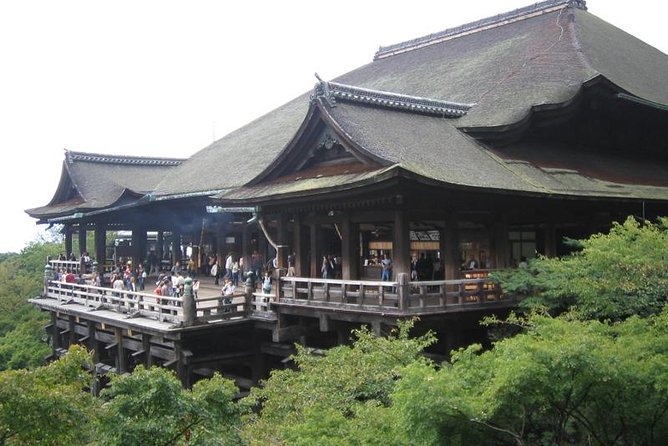
After Arashiyama, you’ll head to Kiyomizu-dera, one of Kyoto’s most iconic temple complexes and a UNESCO-listed site. Admission is included, and you’ll have about 1 hour 15 minutes here.
The headline feature is the dramatic wooden stage that extends over the hillside, built without using a single nail and supported by 139 pillars. Even if you’re not a structural-history nerd (I’m not always), it’s impressive in a plain, immediate way because it changes how you experience the slope and skyline.
You’ll also have time for Otowa Waterfall. Drinking from one of the three streams is traditionally said to bring:
- success
- love
- longevity
For many people, the best approach is to treat this stop like two layers. First, take in the stage views. Second, if you want the waterfall ritual, do it efficiently so it doesn’t swallow your entire visit. With limited time, that keeps you from ending up at the end of the temple route feeling like you only saw half the best stuff.
This temple is also known for cherry blossoms in spring and foliage in autumn, so seasonal crowds can be intense. This tour does not slow down for crowds, but the guided structure helps you still cover the essentials.
Sagano Romantic Train on the Hozugawa River: Short Ride, Big Feeling
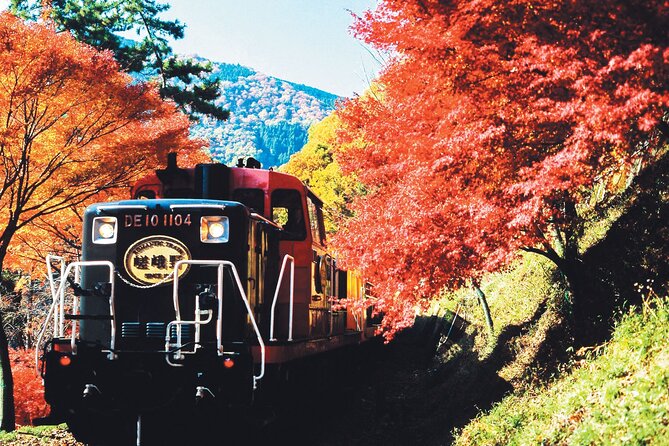
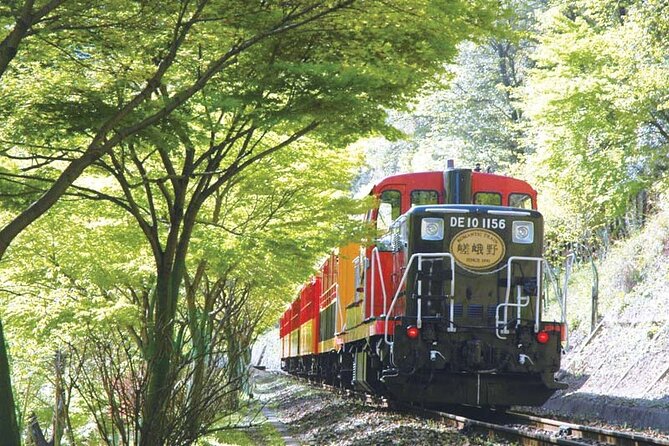
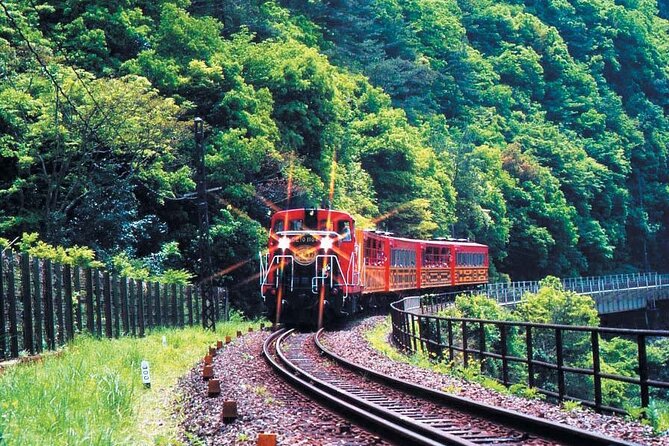
Then you get the part of the day many people remember most: the Sagano Romantic Train. This train runs between Arashiyama and Kameoka and travels along the Hozugawa River. It’s nostalgic and open-air, which matters because you’ll actually feel the weather and see the scenery change across seasons.
The ride is listed as about 23 minutes (and also described as around 25 minutes, depending on timing). Either way, don’t expect this to be a long scenic rail vacation. Instead, treat it like a moving postcard break between walking Kyoto highlights.
What you’ll see depends on season:
- cherry blossoms in spring
- greenery in summer
- colorful foliage in autumn
- snowy scenery in winter
A key practical note: the train seats are older-style wooden. One review mentioned uncomfortable wooden seats, and it’s believable—so if you’re sensitive to seating discomfort, bring patience and a plan to shift posture.
Also, the train board time can change. The tour states that boarding time may be revised and your seat will be designated by the conductor. So don’t assume you’ll pick your favorite side of the car.
And yes, it can be crowded. One review called the train “rather short and crowded,” but still loved the scenery. That’s the trade: you get the classic experience, not a quiet private cabin.
Timing, Crowds, and Walking: How to Set Yourself Up for a Smooth Day
This is a schedule-driven day. That’s not bad—it’s how the tour makes value from your time. Just know what can trip you up.
Here are the real practical considerations that matter:
- The bus leaves on time and will not wait for late arrivals.
- You should check in 10 minutes before departure, because the bus won’t wait if you miss the window.
- The day can include noticeable inclines, and one review flagged that the walking felt tougher than expected.
That means your “comfort gear” matters. Wear shoes you can walk in for multiple legs, not just stand for photos. If you’re planning this with any mobility limits, this may be more active than you want because the day includes temple walking plus bamboo area paths.
Group size is capped at 42, which helps, but Kyoto is still Kyoto. Expect people at every photo moment.
One more transport detail: you can’t use a stroller while riding the Sagano Torokko train. If you’re traveling with a small child and stroller setup, plan accordingly.
If you run into meeting-point trouble, there’s an emergency call center listed in the tour details, available starting 30 minutes before departure until 6:30 PM JST. The tour also warns there’s limited lines for each language, so arriving early is smart.
Lunch Choices: The Japanese Feast Option (and the Vegetarian Reality Check)
You’ll have the option for a Japanese meal. The highlights list includes a buffet lunch option or Beef Shabu Shabu if selected, and the inclusions state an All-You-Can-Enjoy Japanese feast if you choose the meal.
Two useful takeaways from reviews:
- People praised lunch as delicious and filling.
- One note: the buffet lunch wasn’t great for vegetarians.
So here’s the practical approach. If you eat a flexible diet, you can feel good about the meal. If you’re vegetarian (or have strong dietary limits), don’t assume the buffet will work for you. You’ll likely want to have a backup plan nearby, since the tour stop area includes restaurants and street food options.
Also remember: drinks are not included, so plan for water or tea costs when you’re hungry and moving.
Who This Tour Suits Best in Kyoto (and Who Might Prefer Something Else)
This tour fits best when you want a smart one-day sampler of Kyoto and you’re starting from Osaka.
It’s especially good for:
- First-time Kyoto visitors with limited time
- People who want three big Kyoto areas plus the train without line-by-line planning
- Anyone who likes having a guide point out the meaning behind the sights
It’s not ideal if:
- You want lots of free time to wander off-script at each stop
- You strongly dislike crowds, because Fushimi Inari and bamboo areas draw heavy foot traffic
- You’re trying to avoid walking on inclines, since the day can feel more active than expected
Reviews also highlight that the guide experience is a big part of the value. Multiple people singled out guides by name—Hama, Masa, Eric, Akira, Jewel, Maria—and praised how they handled timing and kept the group organized. That helps a lot when the city is busy.
Final Call: Should You Book This Sagano Romantic Train Day Tour?
I’d book this if your goal is a Kyoto greatest-hits day that stays organized and doesn’t eat your vacation time on transit puzzles. The combination of Fushimi Inari, Arashiyama bamboo, Kiyomizu-dera, and a Sagano train ride is a strong payoff for a single long day—especially if you’re meeting from Osaka and want your guide to do the heavy lifting.
Skip it or think twice if you:
- need more time per stop than this schedule allows
- want a quiet, uncrowded rail ride (this train can be crowded)
- rely on stroller use on the train (not allowed)
- have dietary needs where the buffet might not work (vegetarian note from reviews)
If you’re on a first Kyoto trip, this is a very practical way to see a lot without losing the day to logistics. Book it with comfortable shoes, a flexible mindset about crowds, and an interest in both temple views and classic countryside scenery by rail.