
REVIEW · BUDAPEST
Budapest Romantic Private Tuk Tuk Tour
Book on Viator →Operated by Budapest TukTuk · Bookable on Viator
Budapest in two hours is a tall order. A motorized private Tuk Tuk makes it feel doable, with a route built around the big photo views plus the in-between streets you’d miss on foot. I like that it’s genuinely personal—your guide can steer the pace—and I also like the mix of “see it now” sights and areas that help you plan what to revisit later. One thing to consider: it’s weather dependent, and some stops are exposed viewpoints or steep streets, so bring layers and expect a ride that’s more “quick sights” than “museum deep time.”
This tour is also a smart first-day move. You’ll get the lay of the land on both sides of the Danube—bridges, hills, grand buildings, and a few stops that explain why Budapest looks the way it does. If you want a relaxing intro that still feels like you earned great photos, this fits.
In This Review
- Key points to know before you go
- Why a 2-hour Budapest Tuk Tuk tour makes sense on day one
- Hotel pickup to Károlyi Garden: start where you’re staying
- Gellért Spa and Liberty Bridge: the city’s dramatic “join points”
- Gellért Hill highlights: Freedom Statue and Citadella views
- Várkert Bazaar to Matthias Church: walking into the Castle District vibe
- Optional Gul Baba’s Tomb: a steep request that can be worth it
- Margaret Bridge and the Danube icons: closing the loop on both sides
- What makes the private aspect feel worth it
- Is $118.56 per person a good deal for this tour?
- Who should book this Tuk Tuk tour
- Should you book this Budapest Romantic Private Tuk Tuk Tour?
- FAQ
- How long is the Budapest Tuk Tuk tour?
- Is this tour private?
- What’s included for meeting and ending the tour?
- Does the guide speak English?
- Are entry tickets included for stops like Matthias Church and Buda Castle?
- What if it’s too cold or rainy?
- How many people fit in one Tuk Tuk?
Key points to know before you go
- Private, English-speaking guide with the flexibility to match your interests and pace
- Hotel pickup and drop-off in the wider downtown area, so you can start sightseeing fast
- Gellért Hill + Castle District views in one sweep, with classic landmarks you’ll actually recognize later
- Great photo timing built into the route, especially around the bridges and hill lookouts
- Short, stop-and-see time at several major sites, with entry tickets not included
Why a 2-hour Budapest Tuk Tuk tour makes sense on day one
Budapest is big on viewpoints and architecture, but it can be annoying to connect them all. A Tuk Tuk solves that. You cover real ground quickly, yet you still get small-street glimpses that bus tours often skip.
The “romantic” part of this tour isn’t just the name. It’s the mix of hilltop monuments, river views, and castle terraces—things that naturally look good when you’re sitting up high and moving slowly enough to stop for photos. This is also why it works well even if you’ve been in town for a day already: guides can point out what you walked past without noticing.
You can also read our reviews of more tours and experiences in Budapest.



Hotel pickup to Károlyi Garden: start where you’re staying
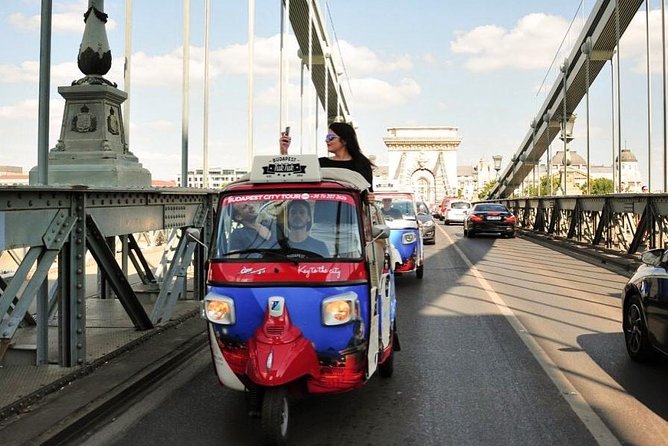
The tour begins with free pickup in the wider downtown area, then ends with drop-off back in that same area. That matters because your first hours in Budapest often get eaten by transit lines, map confusion, and decision fatigue.
From the start, you’ll roll into parts of the city where details matter. You stop at Károlyi Garden, a public park in the 5th district and described as the oldest garden still serving that purpose in downtown, plus one of the best-documented palace gardens in Hungary. Even if you don’t linger long, it’s a nice “Budapest is not only grand buildings” reminder.
You’ll also get a stop around the old town’s “Petite Paris” feel—an area tied to the art and university side of Budapest—with a church and surrounding architecture that sets a specific vibe: elegant, old, and walkable when you’re ready to slow down. And then you’ll reach Salt Square, known historically because of the salt-office there, before the square’s name shifted after construction of the Main Custom House (neo-Renaissance style, built 1871–74 by Miklós Ybl). This kind of stop helps you read the city later—once you know what you’re looking at, Budapest stops being a blur of landmarks.
Gellért Spa and Liberty Bridge: the city’s dramatic “join points”

After that, the route pulls you toward the river. Gellért Spa shows up as one of Budapest’s best-known thermal bath complexes—famous in Europe for natural hot spring bathing. You’re not there to soak on this short tour, but you do get the big visual and the context. And because entry tickets aren’t included, you’ll want to treat this as a look-and-learn stop unless you book a separate bath visit.
Then you pass Liberty Bridge, described as the shortest bridge in central Budapest but one of the most important. This is one of those bridges that acts like a hinge between views: it makes the Danube feel like a connected system instead of just a river you cross once.
From here, you’ll start working your way up toward the iconic hill viewpoints.
Gellért Hill highlights: Freedom Statue and Citadella views
The Gellért Hill portion is the reason many people love this tour. You get a compact loop that makes the hill feel like a viewpoint “hub,” not just a hill you climb.
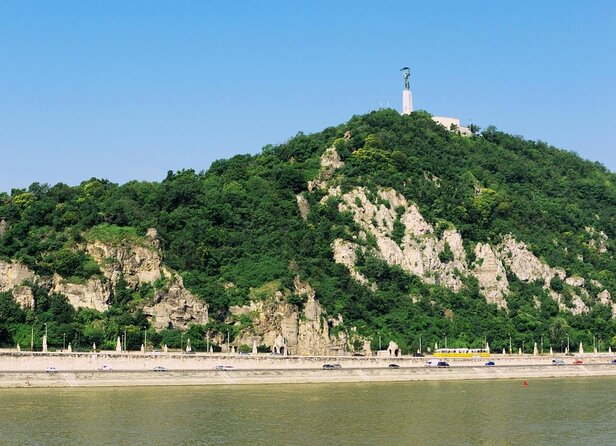
You’ll stop at the Liberty (Freedom) Statue on Gellért Hill—commemorating those who sacrificed their lives for Hungary’s independence, freedom, and prosperity. It’s a relatively quick stop, but it’s powerful because you’re seeing the monument in context: the city spreads out beneath you, and the meaning becomes more than a name on a plaque.
Next comes the Citadella at the top of Gellért Hill. It’s a fortification (a citadel) tied to Budapest’s military strategy through history. Like the Freedom Statue, this is mostly about the setting and the skyline. You’ll get time there for photos, and the views tend to be the kind you remember later when you’re deciding which neighborhoods to explore on your own.
Drawback to plan for: on hills and lookouts, the wind can be real, and the walkways can be exposed. If it’s cold or damp, bring a hat and gloves and keep moving between stops instead of pausing too long in one spot.
Várkert Bazaar to Matthias Church: walking into the Castle District vibe

Once you’re back on the Buda side, you switch from “citywide views” to the Castle District’s layered drama.
You’ll visit Várkert Bazaar, a restored neo-Renaissance complex built between 1875 and 1883 based on designs by Miklós Ybl. Even from outside, it signals how Budapest rebuilt and reimagined its waterfront identity. It’s also a great transition point: the river side gives you the broad view, then the hill side brings the details back.
Then you reach Clark Ádám Square, one of the busiest hubs on the Buda side where major roads meet, along with the Chain Bridge, the tunnel, and streets tied to Lánchíd and Hunyadi János. It’s busy in real life, so as a stop it works best as a quick orientation moment. If you want quiet, take your photos fast and let your guide keep the flow.
After that, you’ll hit the big three Castle District icons, with short time blocks for photos:
- Matthias Church (Roman Catholic; in front of Fisherman’s Bastion)
- Buda Castle (the long royal palace complex history, with today’s Baroque palace built 1749–1769)
- Fisherman’s Bastion (Halászbástya terrace in neo-Gothic and neo-Romanesque styles)
Important practical note: entry tickets aren’t included for Matthias Church, Buda Castle, or Fisherman’s Bastion. So you should expect exterior viewing, terrace views, and photo stops rather than a full indoor visit plan. That’s not a problem—it matches the 2-hour structure—but it does mean you’ll want separate plans if you care about interiors.
My advice: use your guide’s explanations to decide what you want to return for. If something feels like a must-see once you hear the story, that’s exactly what a good first orientation tour should do.

Optional Gul Baba’s Tomb: a steep request that can be worth it
There’s an optional stop for Gül Baba’s Tomb (Gul Baba Turbeje), listed as ON REQUEST. It’s an octagonal tomb located on Mosque Street, described as a short but steep walk from the Margaret Bridge area in the Rózsadomb district.
This one is a great example of why the tour can feel more tailored than “just drive and stop.” If you want a bit more variety beyond the Castle District, this adds a different historical thread. The catch is obvious: the walk involves a steep section, so if you’re limited on mobility or you’re traveling in winter ice conditions, you might skip it.
Margaret Bridge and the Danube icons: closing the loop on both sides
After the Castle District area, the route swings back across the Danube zone with stops that help you connect what you saw to the city’s larger layout.
You’ll see Margaret Bridge (Margit híd), described as a three-way bridge linking Buda and Pest and also linking Margaret Island to the banks. It’s a simple stop, but it’s a useful one for geography. Once you understand where Margaret Island sits relative to the bridges, your future walk plans get easier.
You’ll also pass by or stop near:
- The Hungarian Academy of Sciences, with its seat on the Danube bank
- Gresham Palace, an Art Nouveau building completed in 1906, now associated with the Four Seasons Hotel Budapest Gresham Palace
- St. Stephen’s Basilica, a Roman Catholic basilica named for the first King of Hungary; the reliquary is said to house Stephen’s supposed right hand
- Elisabeth Square, a major green space in central Pest with the monumental Danube Fountain
These are big, iconic sights. On a short private tour, the value is not that you go inside everything—it’s that you get the street-level context so you can choose later. If you want grand interiors, you’ll need separate visits. If you want “recognition” and a working map of Budapest’s visual anchors, this part does that job quickly.
What makes the private aspect feel worth it
A standard tour can feel like you’re getting herded from one stop to the next. Here, the private setup changes the feel.
You’ll ride with a guide who can adjust to your interests. That shows up in how people talk about different guides on this route—names like Norbert, Gabriel (also listed as Gabor), Greg, Peter, Paul, Ben, Dave, Robi, Tomi, and Norbert keep coming up with themes like clear explanations, quick handling of photo stops, and fitting the route around what you care about. Even when you’re not seeing everything in depth, you’re not wasting time either.
Also, the Tuk Tuk itself is part of the “why.” It can move through areas where bigger vehicles can struggle, which means you spend more time on the city’s actual texture instead of only looking at the city from a distance.
Is $118.56 per person a good deal for this tour?
For $118.56 per person and about 2 hours, you’re paying for three things at once: a private guide, a Tuk Tuk ride that helps you cover ground fast, and hotel pickup/drop-off.
If you’re traveling solo or as a couple, the private format can make sense because you’re not locked into a group pace and you’re not spending your morning/evening hopping taxis or rideshares to stack viewpoints. If you’re with a small group, it can also feel efficient because one Tuk Tuk is listed as comfortable for 2–3 people. If your party has an odd number, the operator notes you can specify whether you’d like one traveler seated in another Tuk Tuk.
Where value can dip: if you’re the type who loves long museum visits and detailed indoor tours, this may feel short because entry tickets aren’t included and many stops are designed as photo-and-context breaks.
My take: this is excellent value as an intro and orientation tool, especially if it’s your first time in Budapest or if you want to pick a few “must return” sights afterward.
Who should book this Tuk Tuk tour
This is a good fit if:
- You want a first-day overview of both Buda and Pest
- You like views plus context, not just a list of monuments
- You prefer a private pace with an English-speaking guide
- You want a ride that gets you to places large vehicles may miss
It may not be the best fit if:
- You’re hoping for long indoor visits at major sites
- You’re very sensitive to cold or wind at hilltop viewpoints
- You want a slow, walking-heavy day
Should you book this Budapest Romantic Private Tuk Tuk Tour?
I’d book it if you want to get oriented fast and still leave the city with a clear sense of what’s where. The route hits the kind of places you’ll use as anchors for the rest of your trip—Liberty Bridge, Gellért Hill, the Castle District icons, and key Pest landmarks. Add hotel pickup/drop-off, private guide attention, and a ride that feels fun instead of logistical, and it becomes a strong “time well spent” choice.
If the weather is working in your favor, this is one of those tours that can turn Budapest from overwhelming into manageable in just two hours.
FAQ
How long is the Budapest Tuk Tuk tour?
The tour runs for about 2 hours.
Is this tour private?
Yes. It’s a private tour, meaning only your group participates.
What’s included for meeting and ending the tour?
You get free pickup and free drop-off in the wider downtown area. The activity ends back at the meeting point.
Does the guide speak English?
Yes. The tour is offered with an English-speaking guide.
Are entry tickets included for stops like Matthias Church and Buda Castle?
No. Entry tickets are not included, so you’ll need separate tickets if you want to go inside.
What if it’s too cold or rainy?
The tour is subject to favorable weather conditions. If it’s canceled due to poor weather, you’ll be offered an alternative date.
How many people fit in one Tuk Tuk?
One Tuk Tuk is comfortable for 2–3 people. If your group has an odd number, you can specify whether one traveler should ride in another Tuk Tuk.